Rising damp — Why physical construction beats chemical "patching"
January 12, 2026 | By Jesús Moral | Maestro artesano y arquitecto técnico | 3 min read
Technical consulting & Lime renders
How to solve rising damp in old walls?
The only definitive solution is physical, not chemical. It requires replacing cement mortars with natural breathable renders —lime, trabadillo or clay— and executing a ventilated perimeter drainage. Injections or plastic paints only hide the problem temporarily, aggravating the internal degradation of the wall.
When the building falls ill from the feet up
Rising damp in historic buildings is not just a stain; it is a systemic pathology. Trying to solve it with a single material or a “miracle” paint is, at best, naive.
In our experience rehabilitating heritage in the Axarquía, the pattern repeats: wide masonry walls suffocated by modern interventions that have broken their hygrothermal balance. Groundwater rises seeking to evaporate and, finding airtight barriers (cement, plastics), degrades the structure from within.
Durable treatment demands physics, not chemistry. It requires understanding the building as an organism that must breathe.
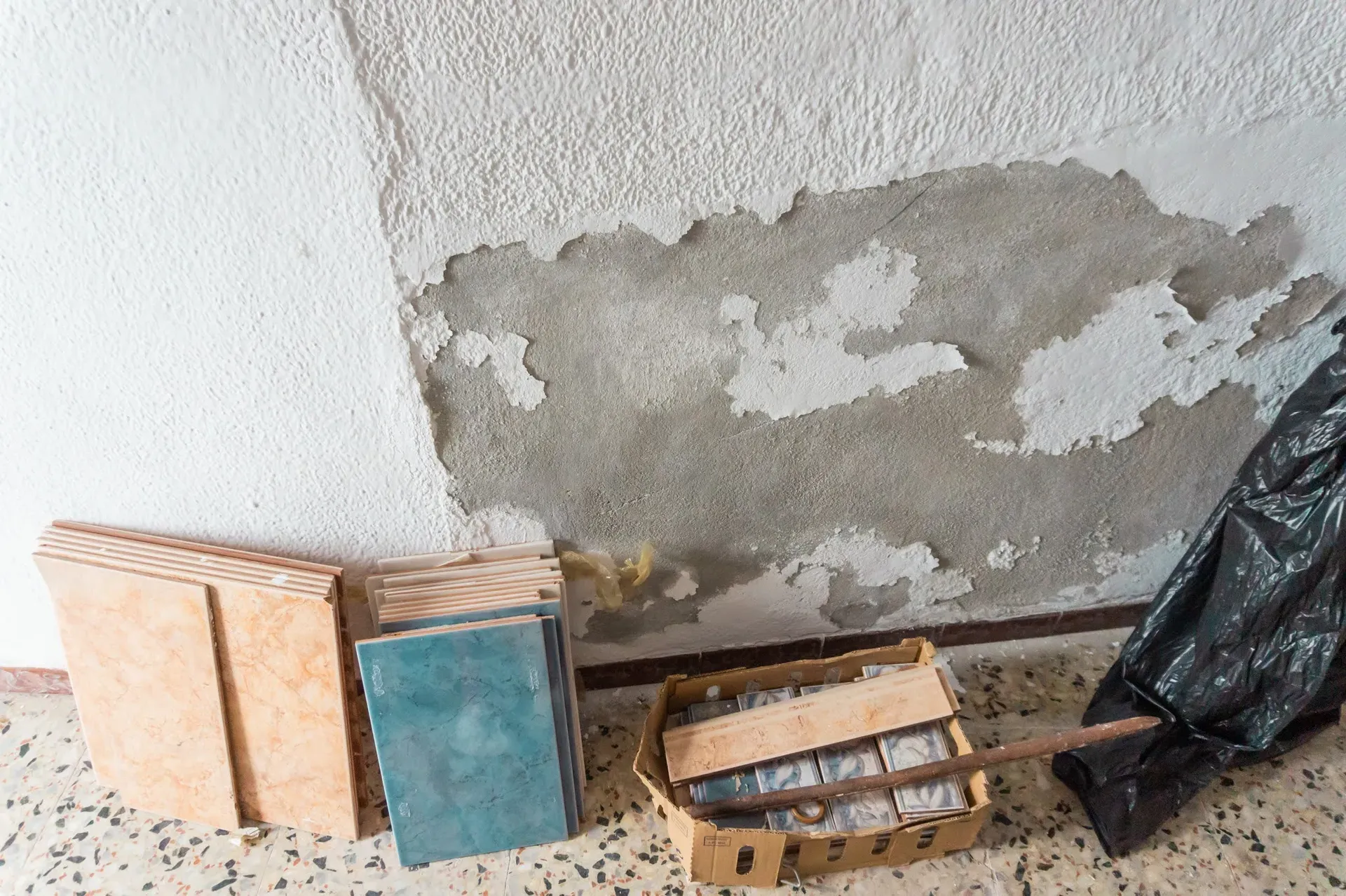
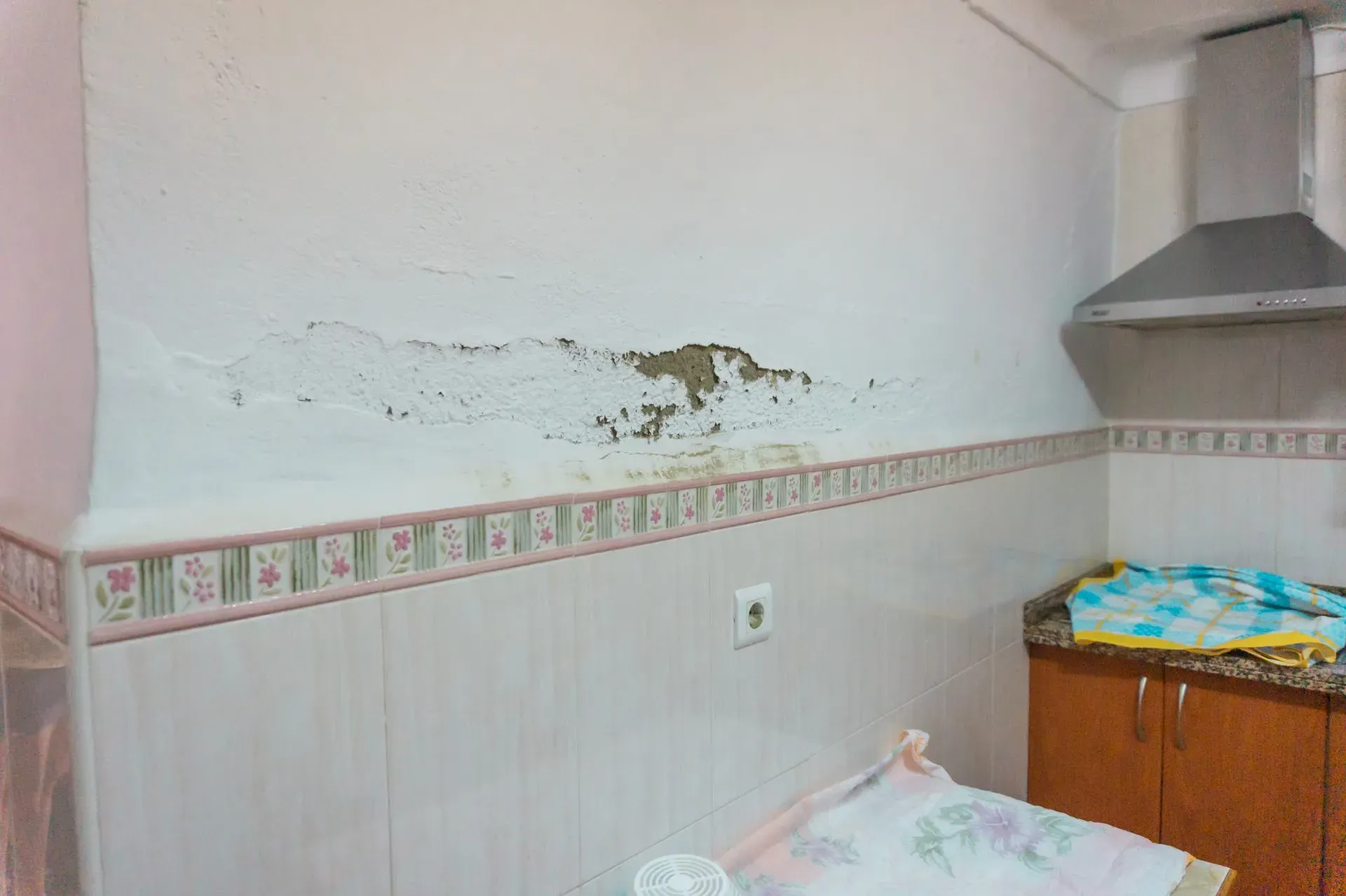
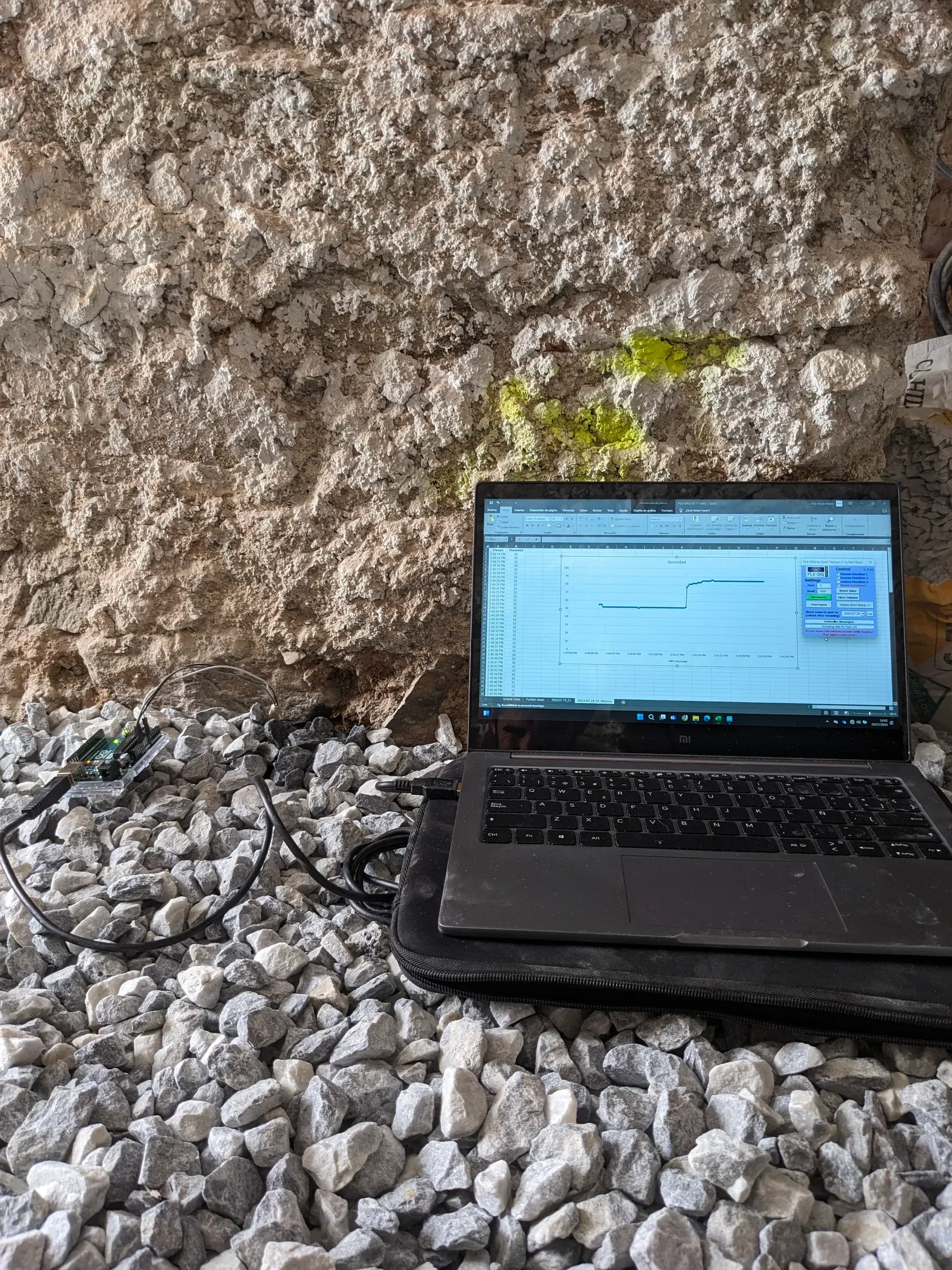
The visible symptom: crystallization of salts breaking the waterproof coating.
Comprehensive remediation on two fronts
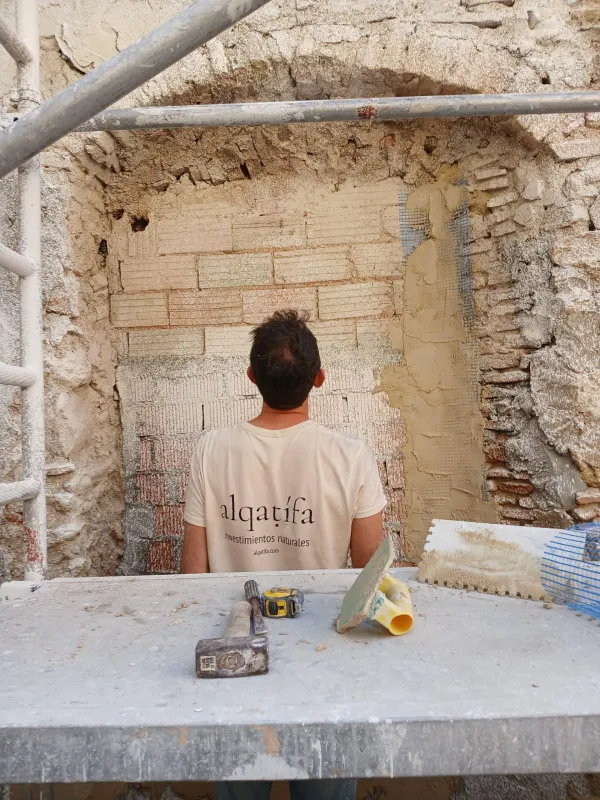
As we presented in our technical talk during the CONTART 2024 congress, at Alqatifa we do not cover dampness; we manage its exit. Our intervention methodology attacks the origin through two synergistic actions.
1. Subsoil management through active ventilation
The first step is to reduce the water load. Instead of confining the water, we create systems that allow its passive evacuation.
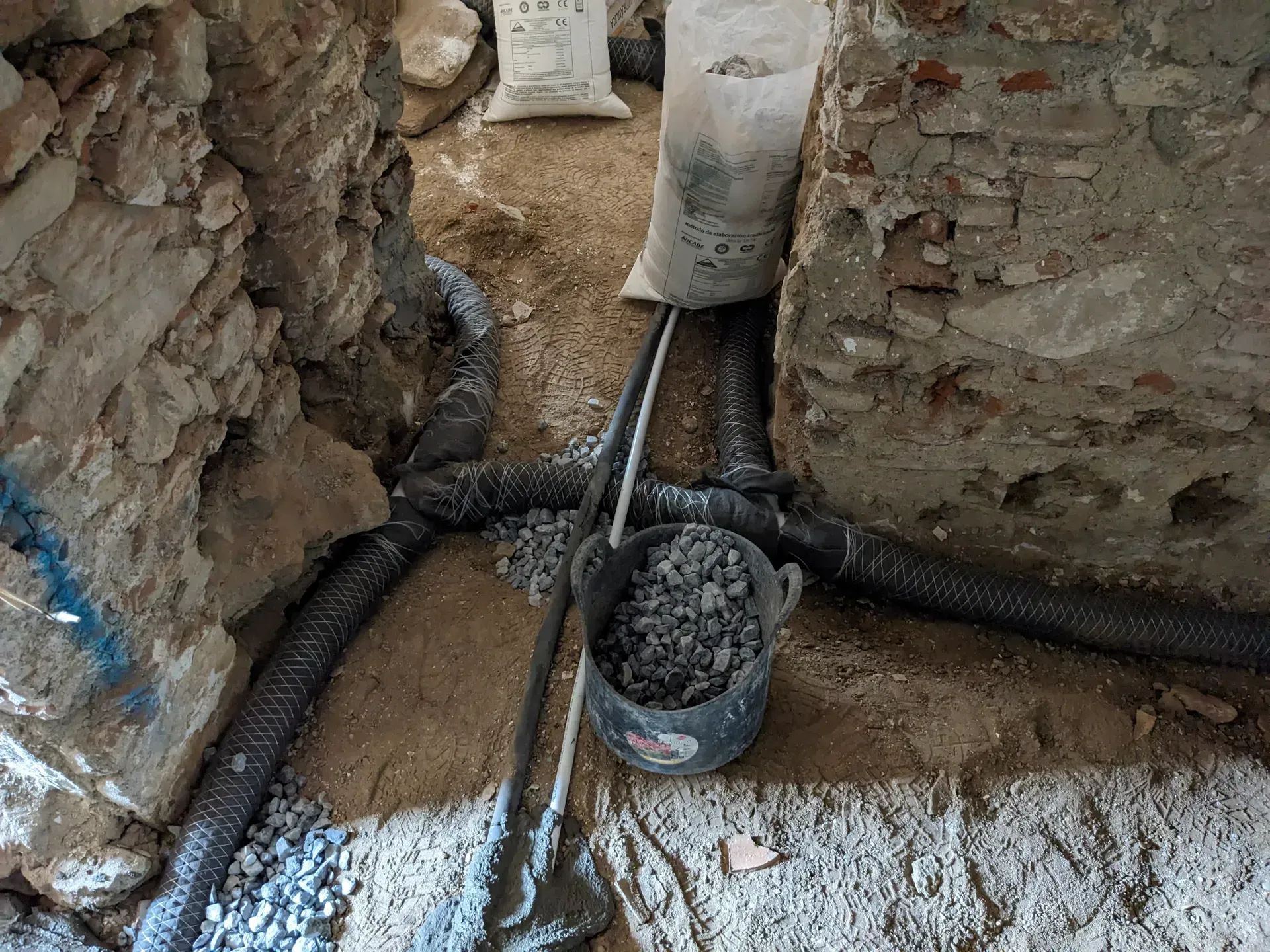
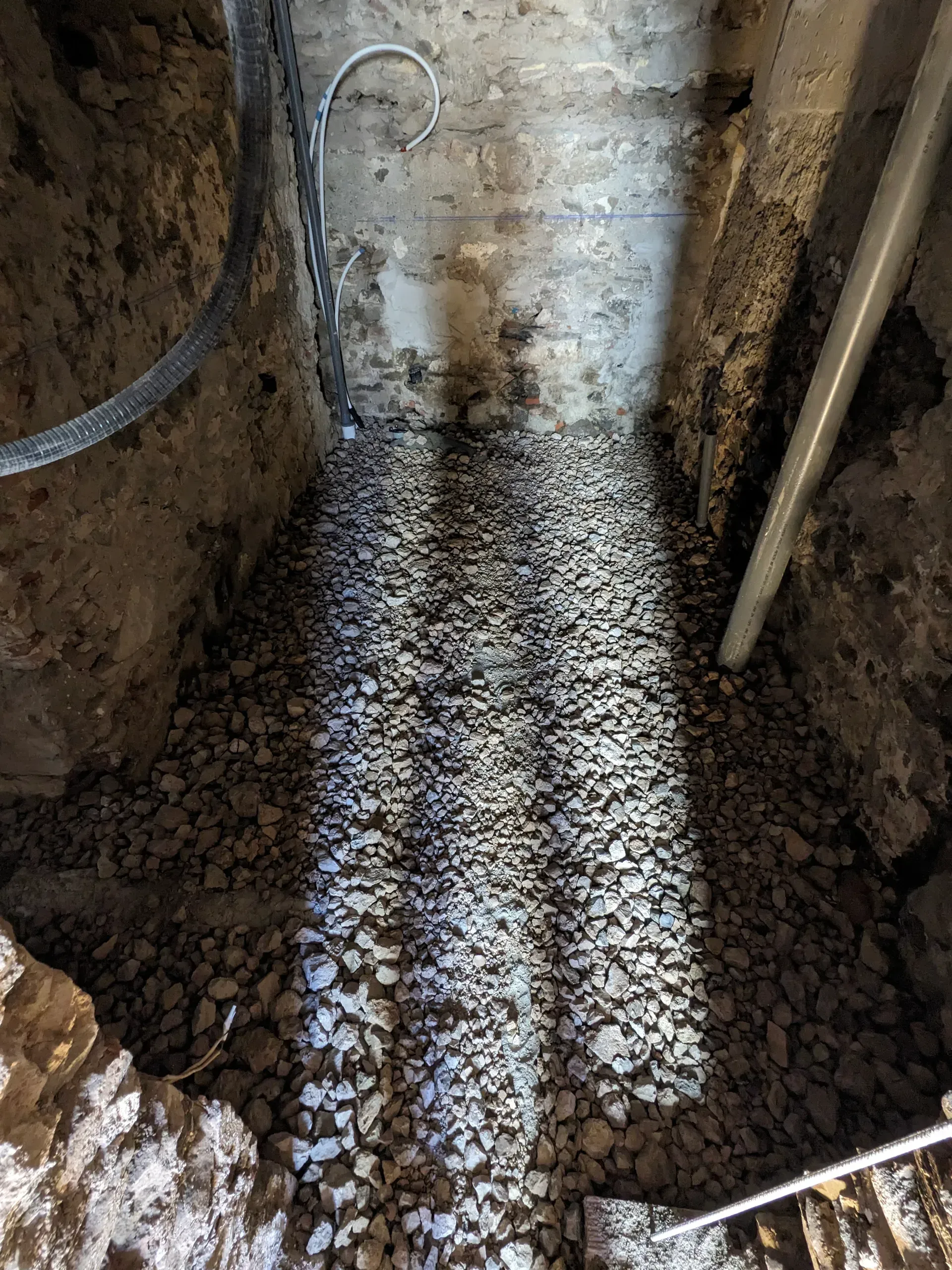
- The drainage network: we execute a perimeter network of perforated pipes at the base of the wall. These arteries collect groundwater before it touches the masonry.
- Thermal draft ventilation: the key is not just draining water, but moving air. We connect the drainage network to exterior points, prioritizing cross ventilation. When geometry demands it, as in the Alehandría House project, we connect the system to vertical risers that ascend to the roof, topped with static extractors.
This generates a continuous air flow by natural suction (chimney effect) that actively extracts humid air from the ground, forcing the drying of the wall base without energy consumption.
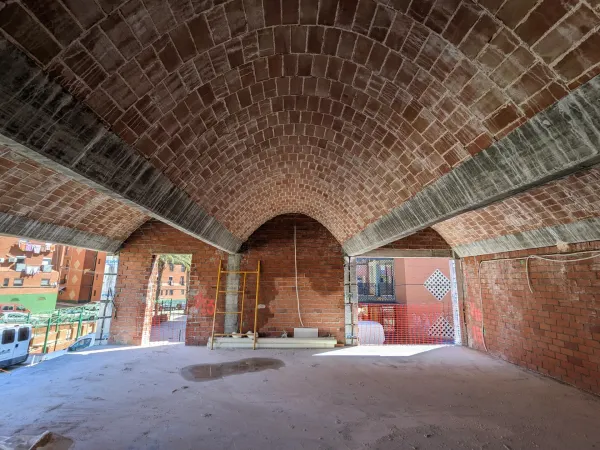
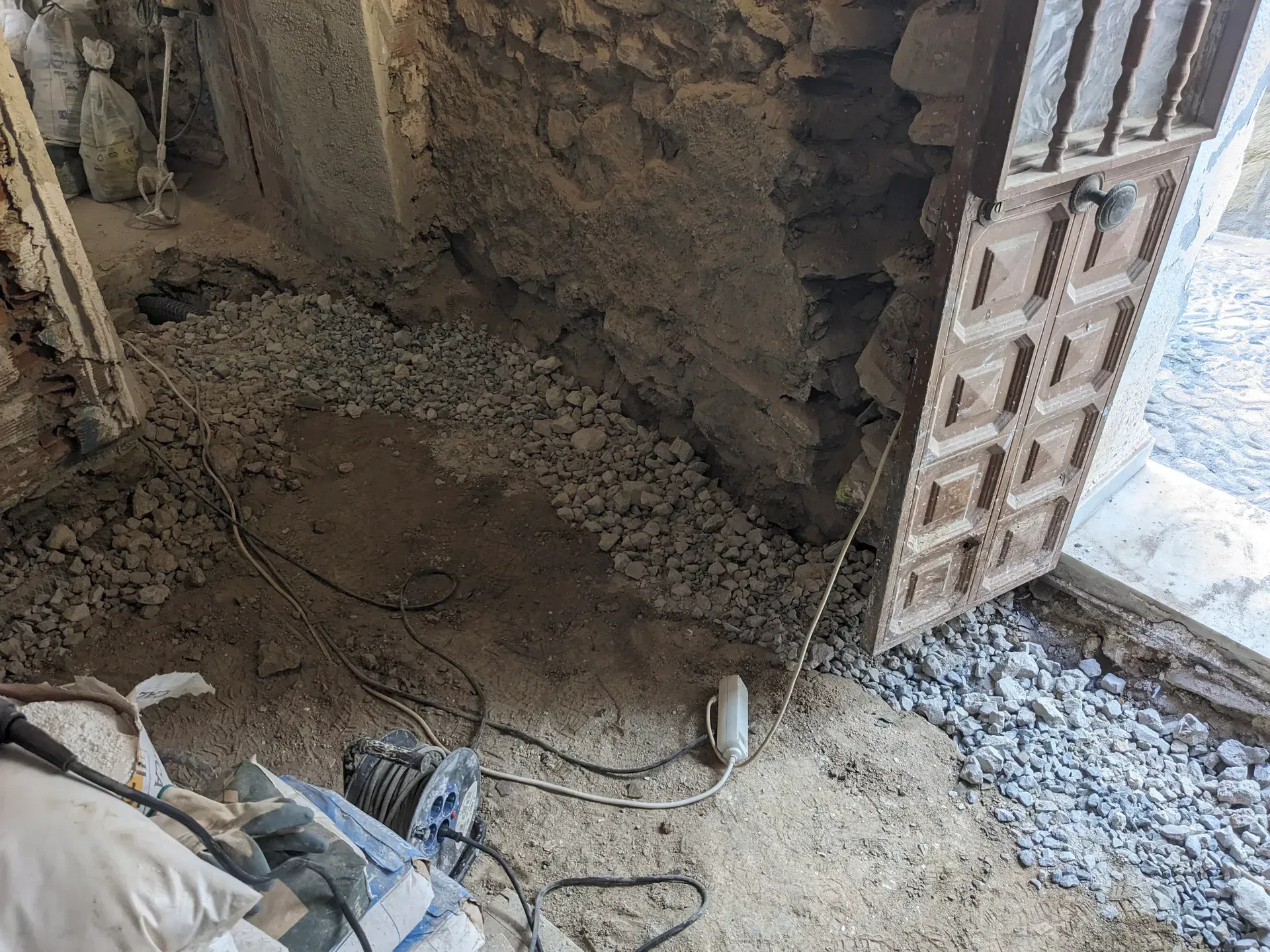
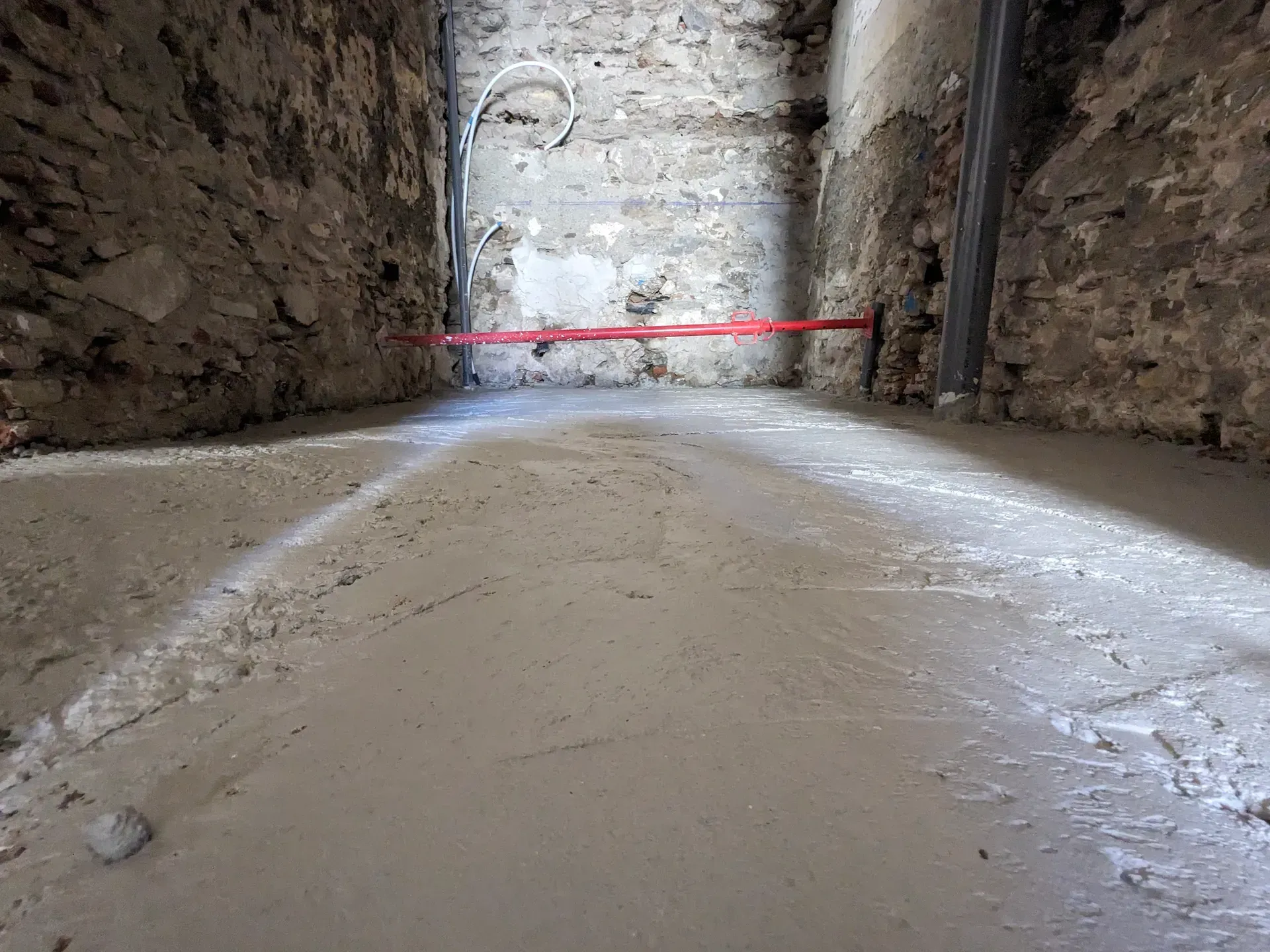
We complement this action indoors by replacing waterproof concrete slabs —which push dampness towards the walls— with ventilated and lightweight slabs. We use hygroscopic aggregates such as expanded clay and lime binders, allowing the floor of the dwelling to breathe in unison with the rest of the building.
2. Breathable renders — The skin that breathes
Once the source is managed, we must ensure that the wall releases residual moisture.
The historical use of Portland cement mortars (low permeability) is the main cause of the chronicity of these pathologies. Cement seals the pore, causing salts to crystallize inside (cryptoflorescence) and burst the material.
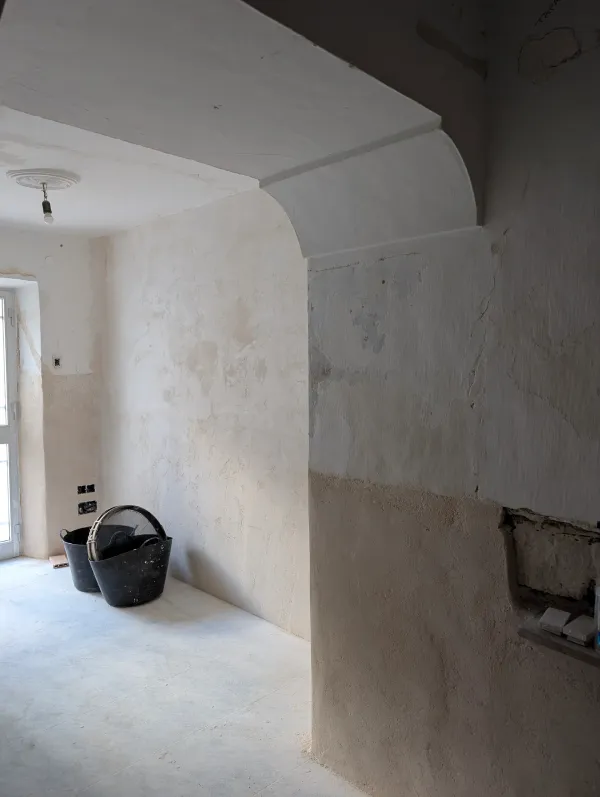
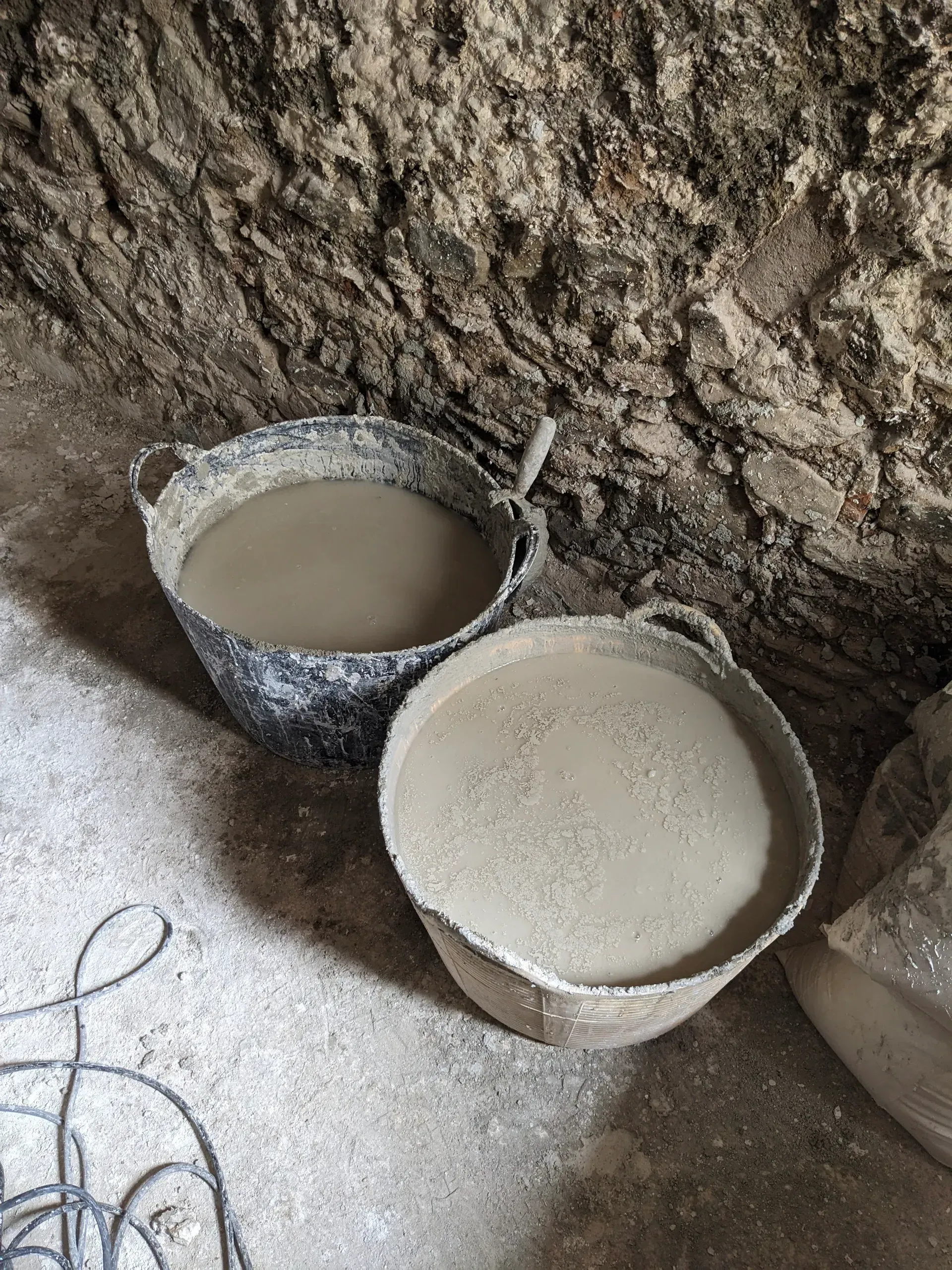
The technical solution is the return to natural breathable materials: lime, trabadillo or clay. We formulate renders with a low vapor diffusion resistance factor (μ). These mortars act as an osmotic membrane: they allow moisture to migrate to the outside and evaporate, keeping the core of the wall dry and healthy.
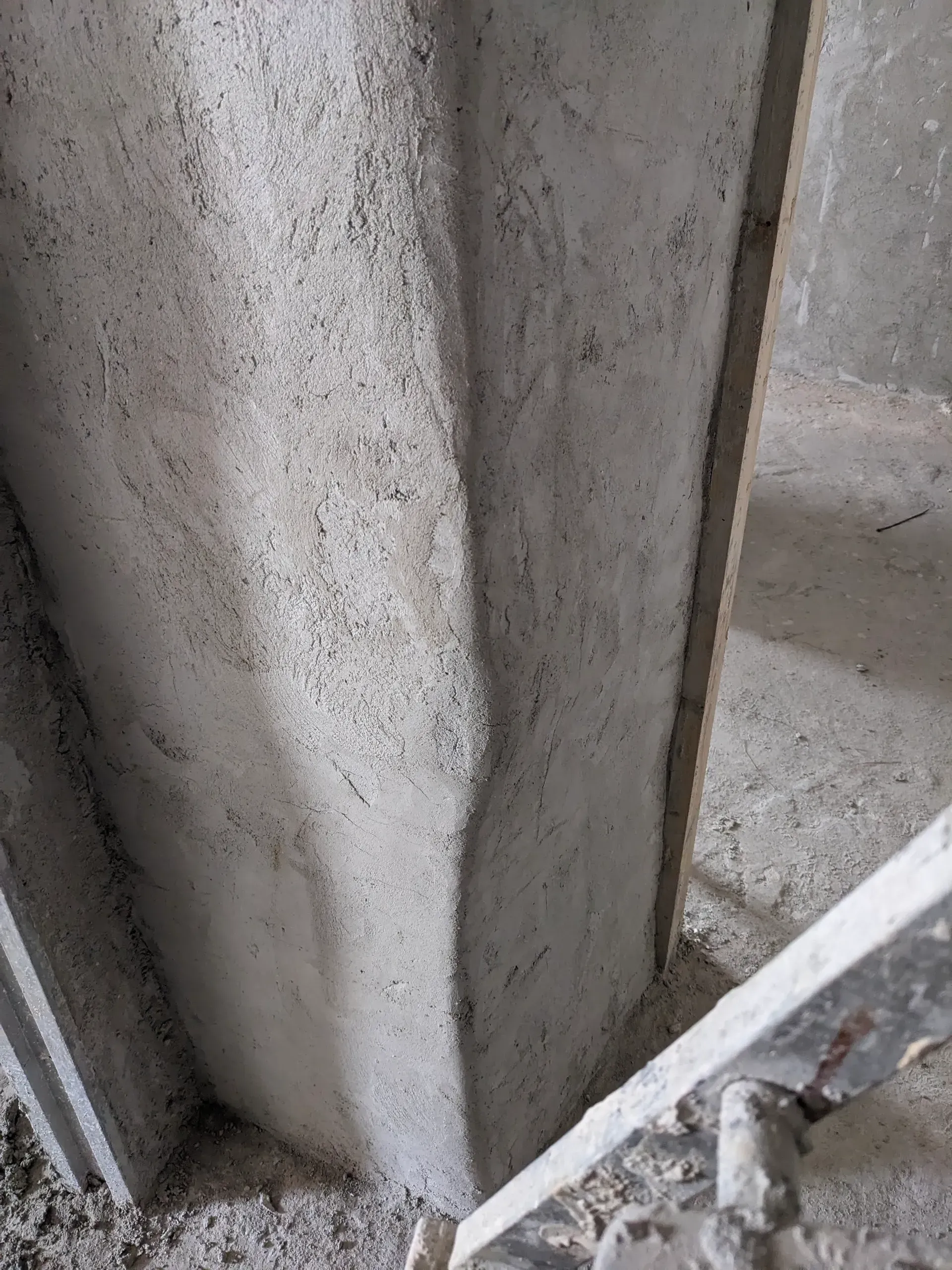
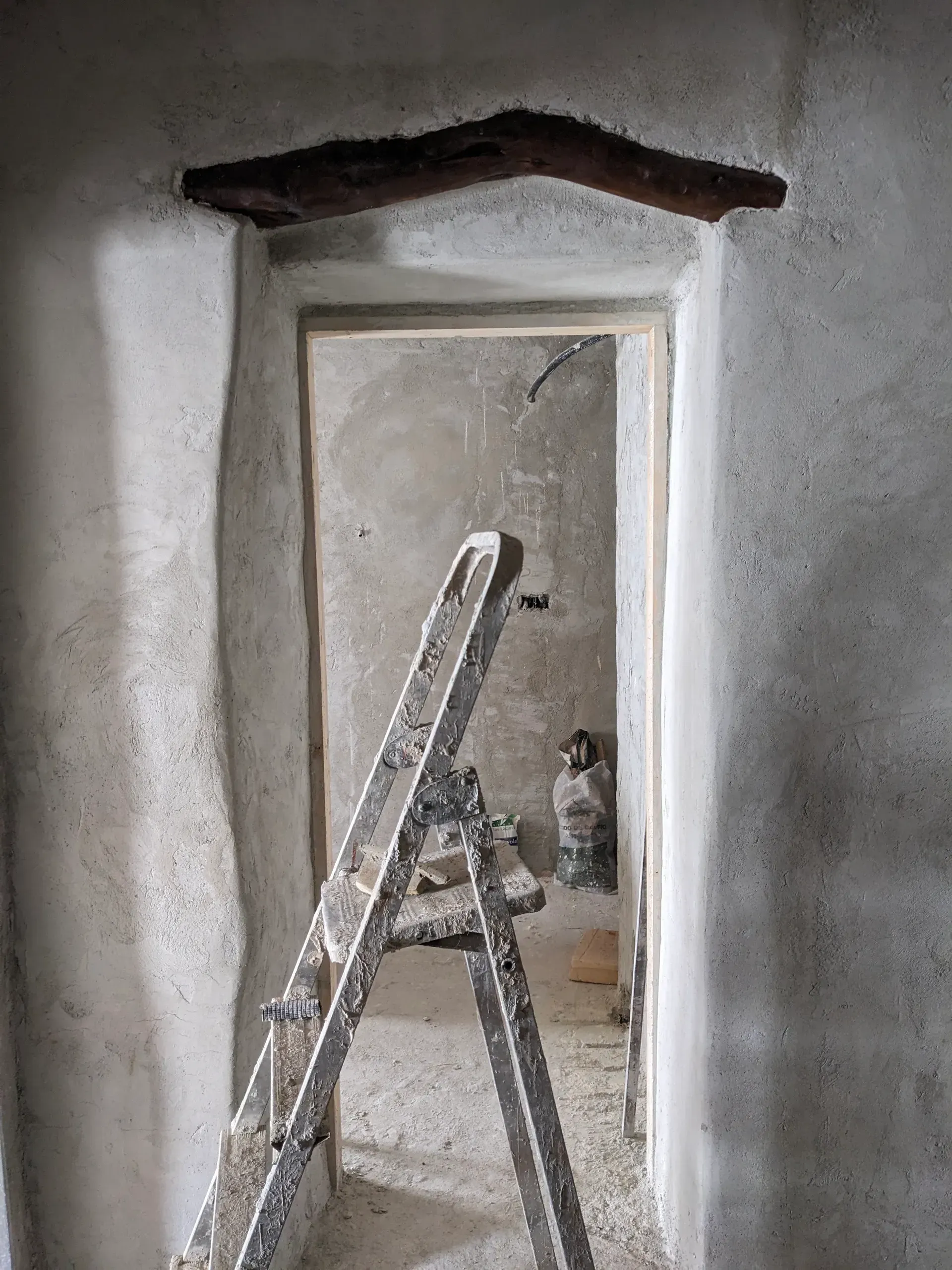
We do not apply an aesthetic layer; we restore the biological function of the wall.
Guarantee of craft
If the project requires it, we monitor the results.
This systemic approach is not a theory; it is our daily practice on site. By integrating fluid engineering solutions (ventilation) with traditional material science, we achieve what synthetic patches cannot: a definitive rehabilitation.
Does your building show these symptoms?
- Recurring degradation of baseboards and renders on ground floors.
- Appearance of white “cotton” (salts) on the surface.
- Persistent feeling of cold and ambient humidity.
If so, your home does not need paint or chemical injections; it needs an intervention that reconciles material science with the health of its walls.
Inspired by this post?
Discover how we can help you.
By posting a comment, you accept our privacy policy. Your email is used to manage your avatar (Gravatar) and prevent spam, but it will not be published.