Execution of a traditional tile vault staircase
November 07, 2024 | By María José Bustos | Artesana y arquitecta técnica | 3 min read
Tile stairs & vaults
What is a tile vault staircase?
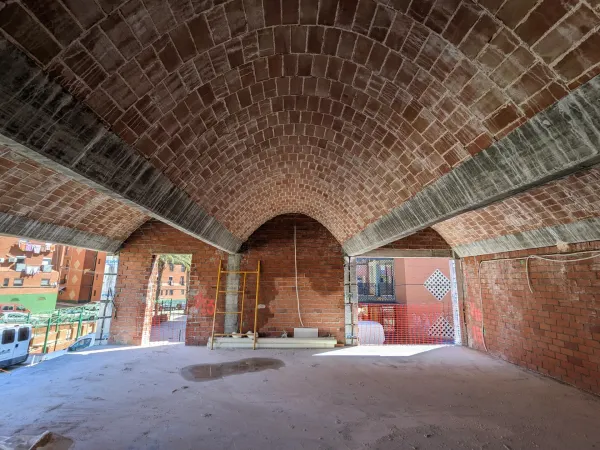
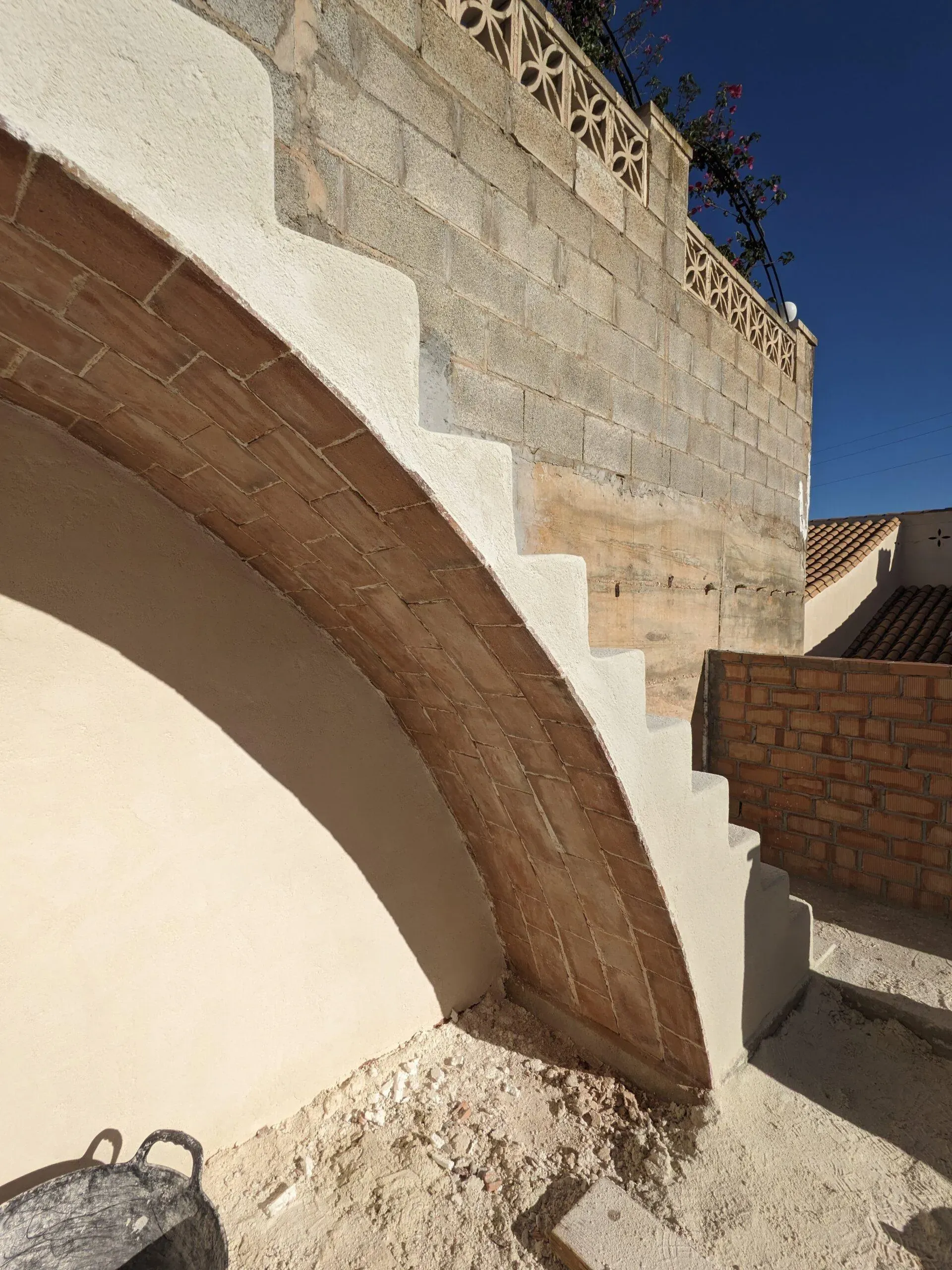
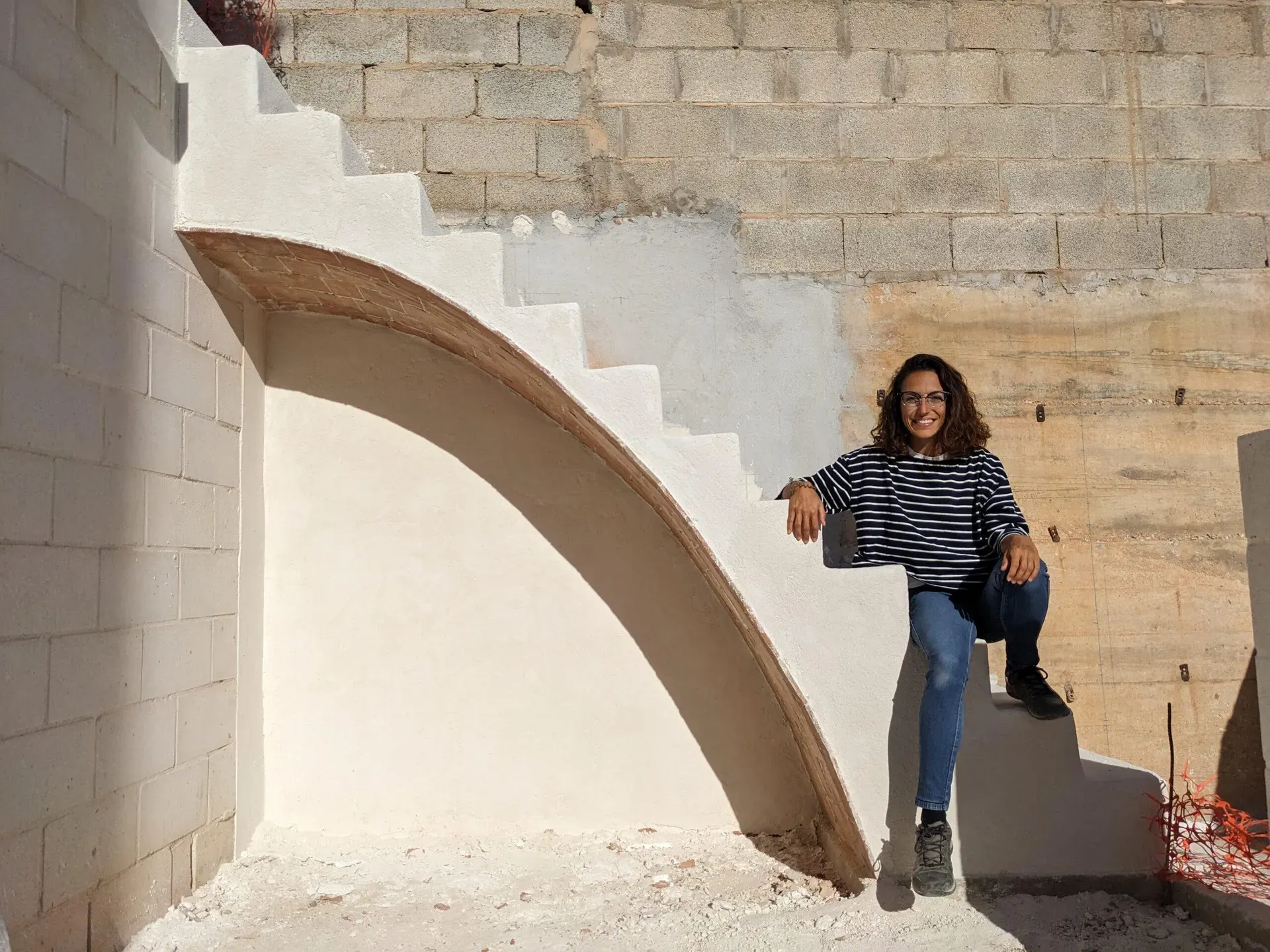
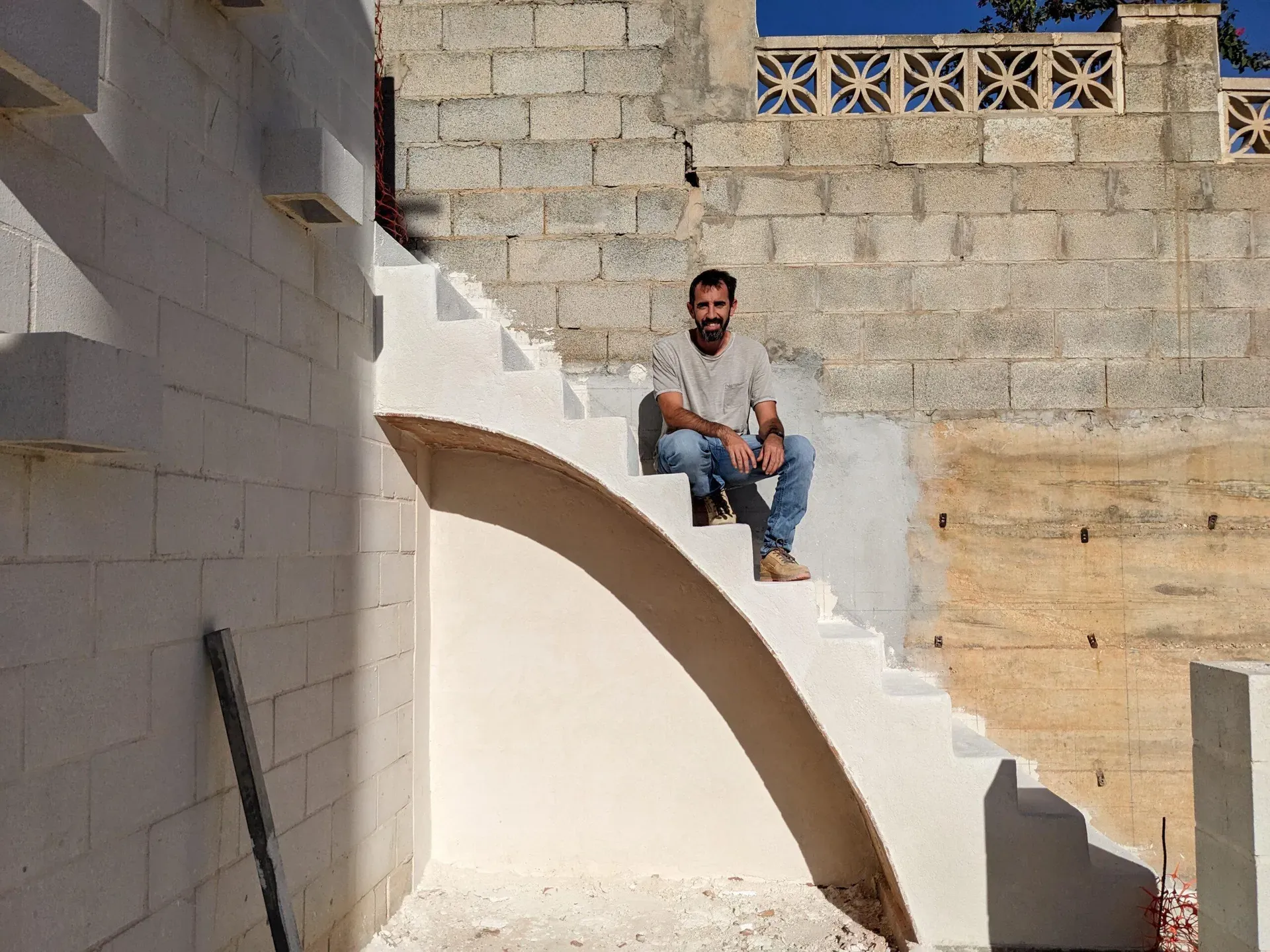
It is a staircase built using the Catalan vault technique: several layers of flat brick (rasilla) glued with gypsum or fast-setting mortar. It is executed "in the air" without the need for complex formwork or centering, achieving a self-supporting, light, and very compression-resistant structure.
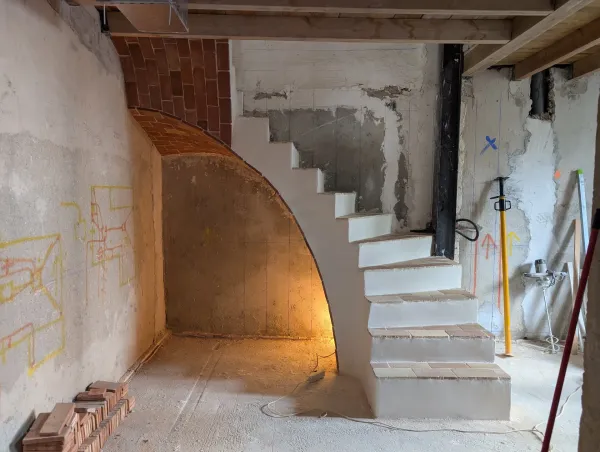
At the end of 2023, we had the opportunity to build a traditional tile vault staircase in a bioclimatic single-family home in La Cala del Moral, Málaga.
This construction technique, inherited from traditional architecture, is perfect for creating solid, aesthetic, and durable structures without the need to use conventional materials like concrete or steel.
In this article, we tell you in detail how we executed this staircase, step by step.
Execution process: precision and technique
The tile vault staircase we realized is characterized by the absence of formwork and the use of a double arch. Below, we describe the construction process followed for its execution:
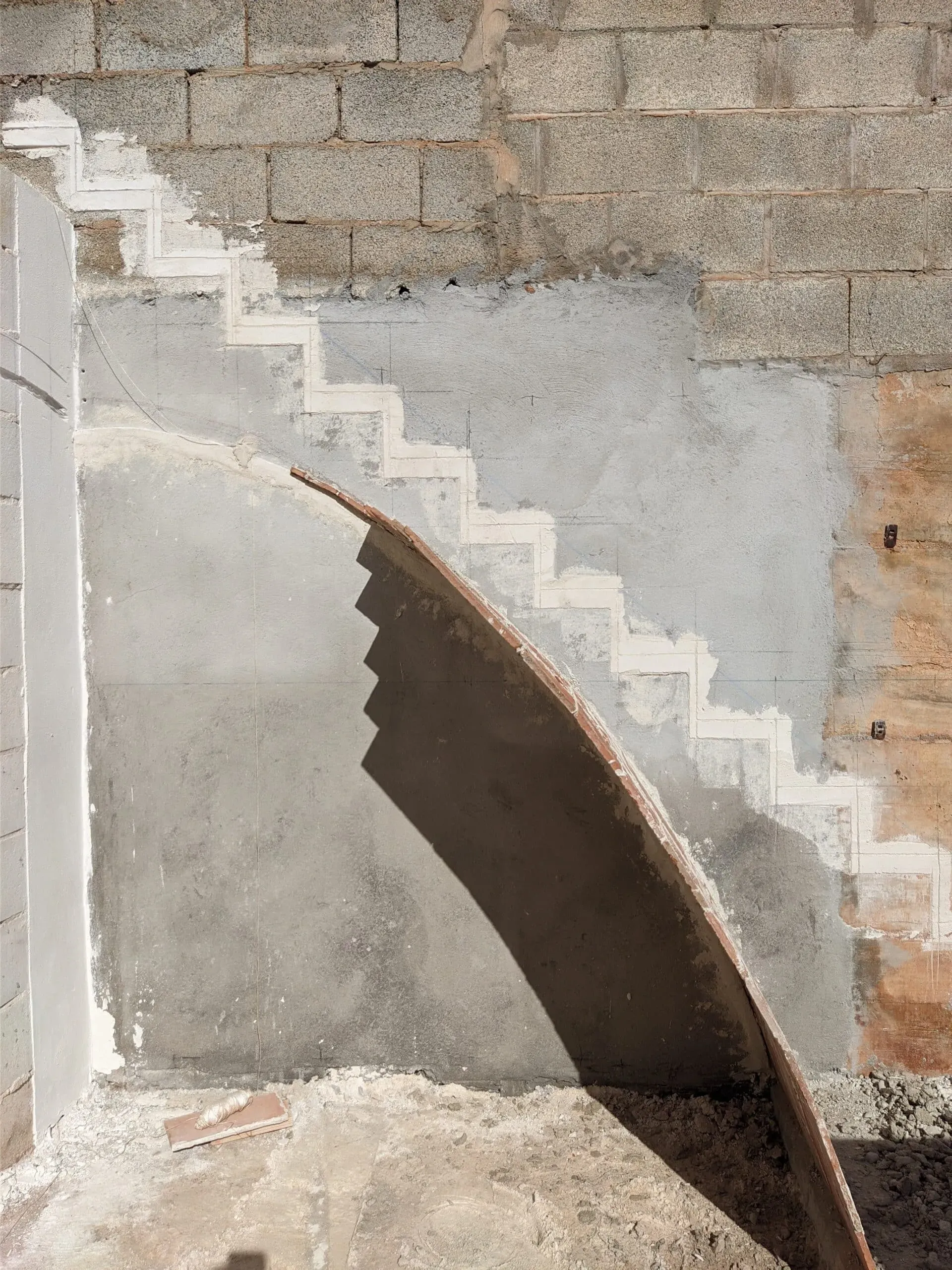
- Layout with chain (catenary arch): the first step is the layout of the catenary arch, which defines the general shape and provides the base structure. In this project, we performed the layout using a chain to achieve the perfect catenary arch design, ensuring resistance and structural balance from the start.
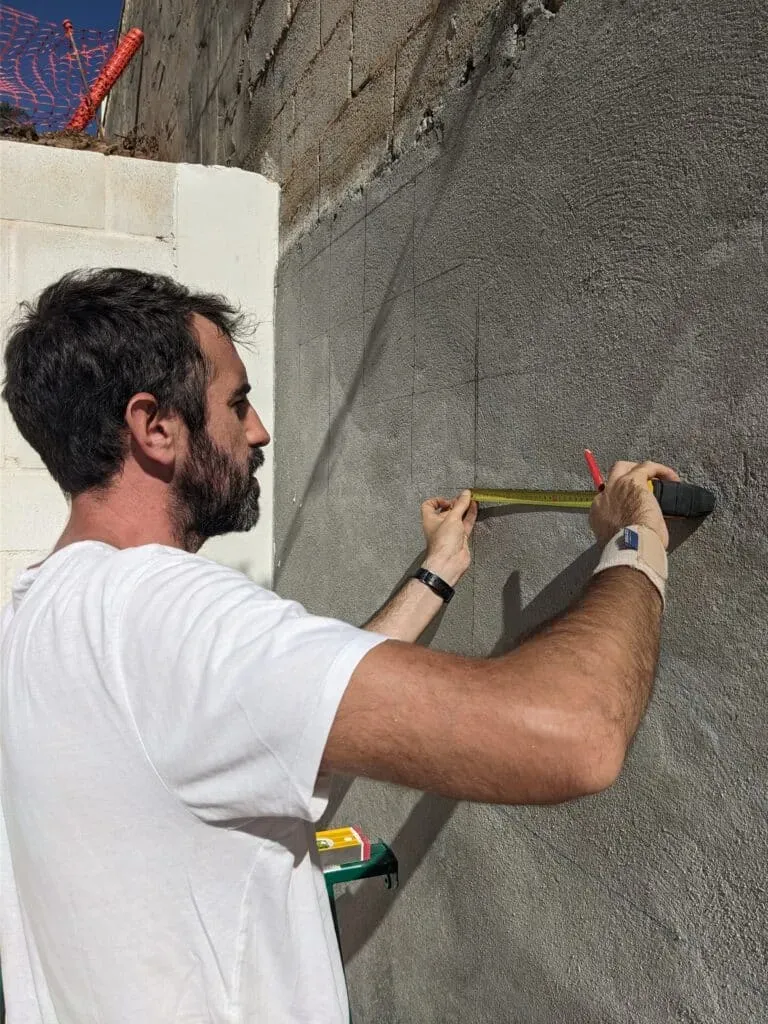
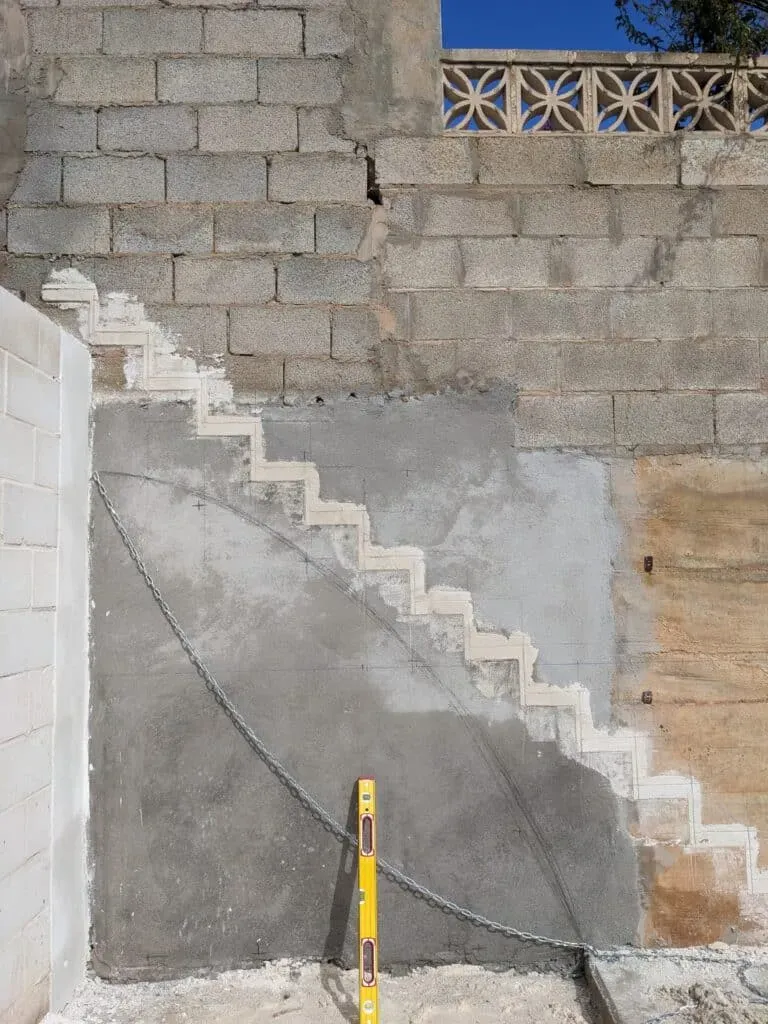
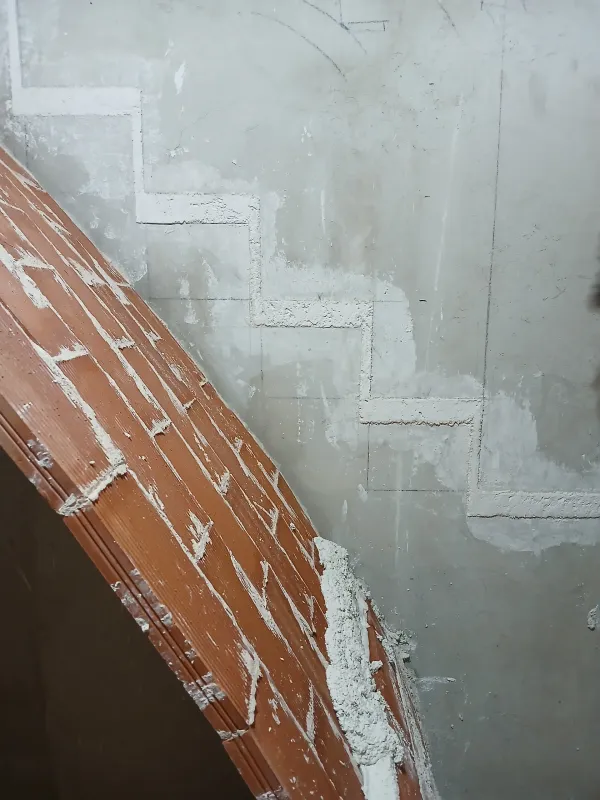
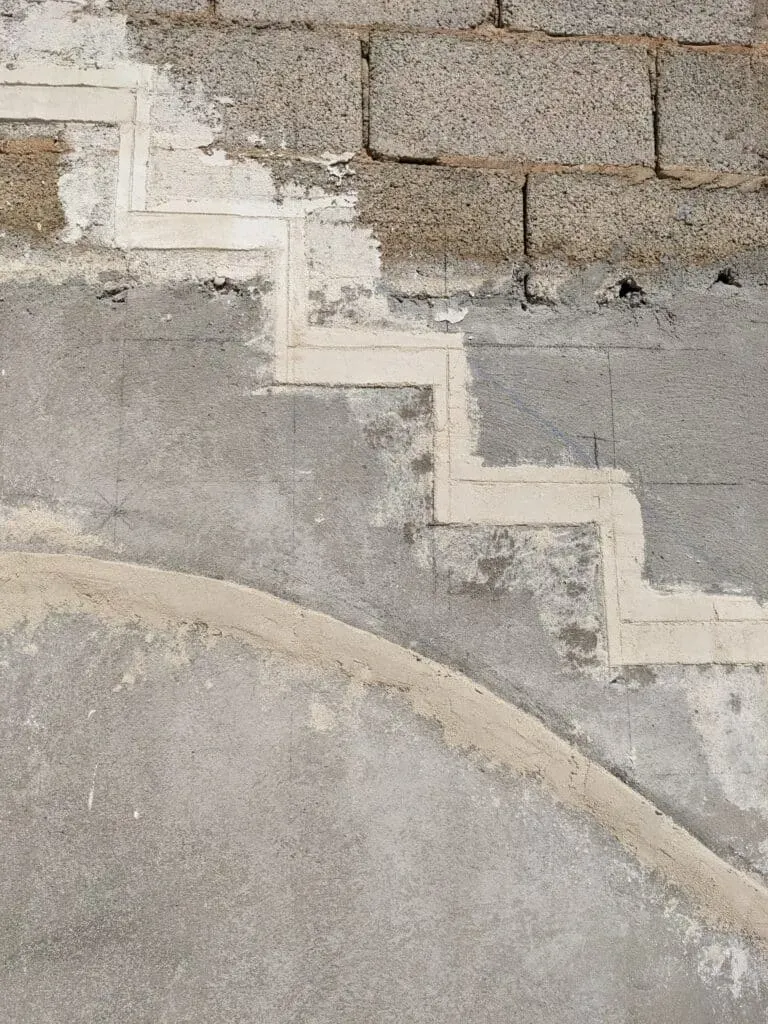
- Marking of bond and steps: with the general shape of the arch defined, we proceeded to mark the steps and the bond on each step. This marking is fundamental to maintain precision in every step of construction, facilitating the uniform placement of bricks and ensuring that the staircase maintains the required aesthetics and functionality.
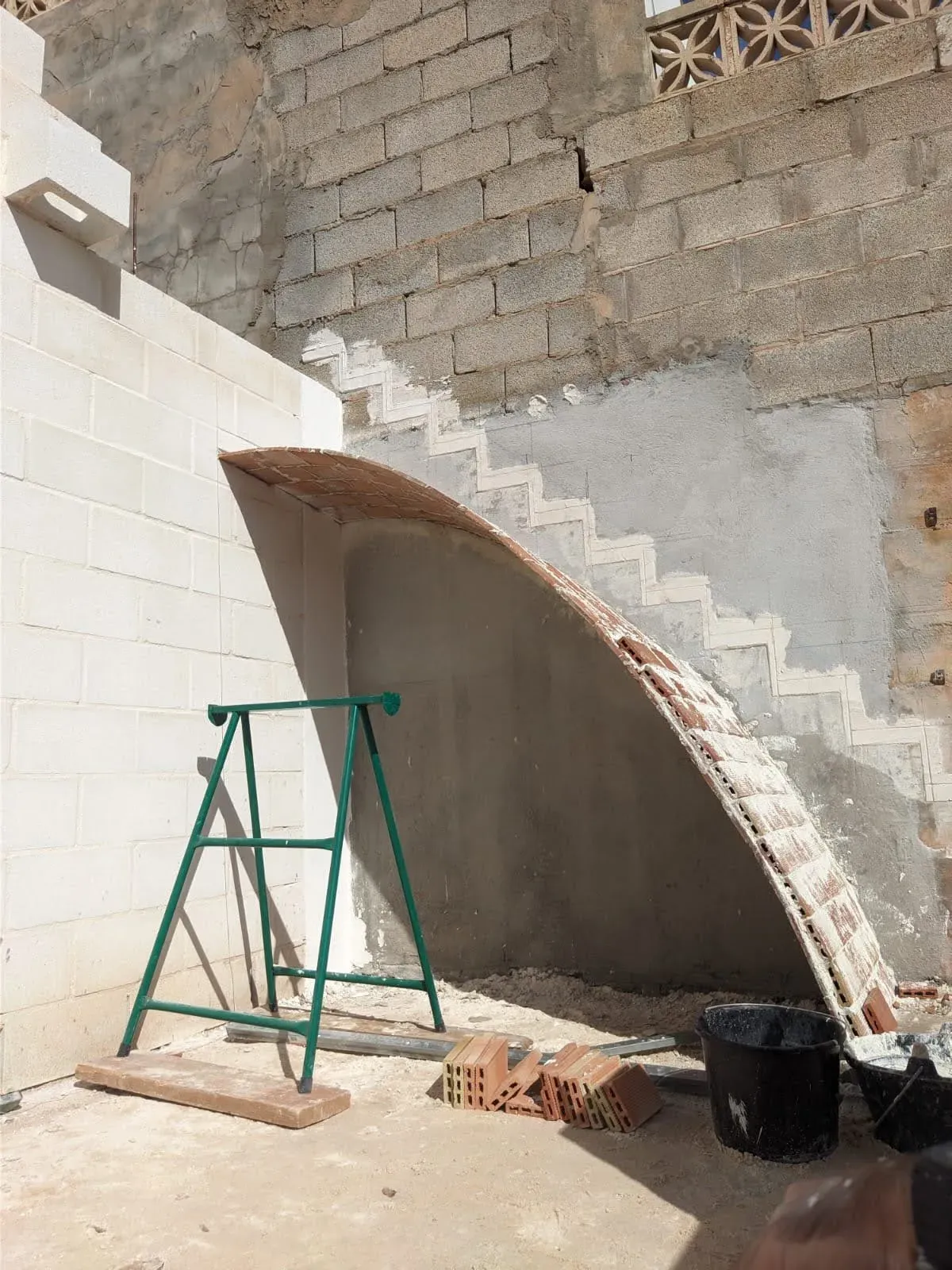
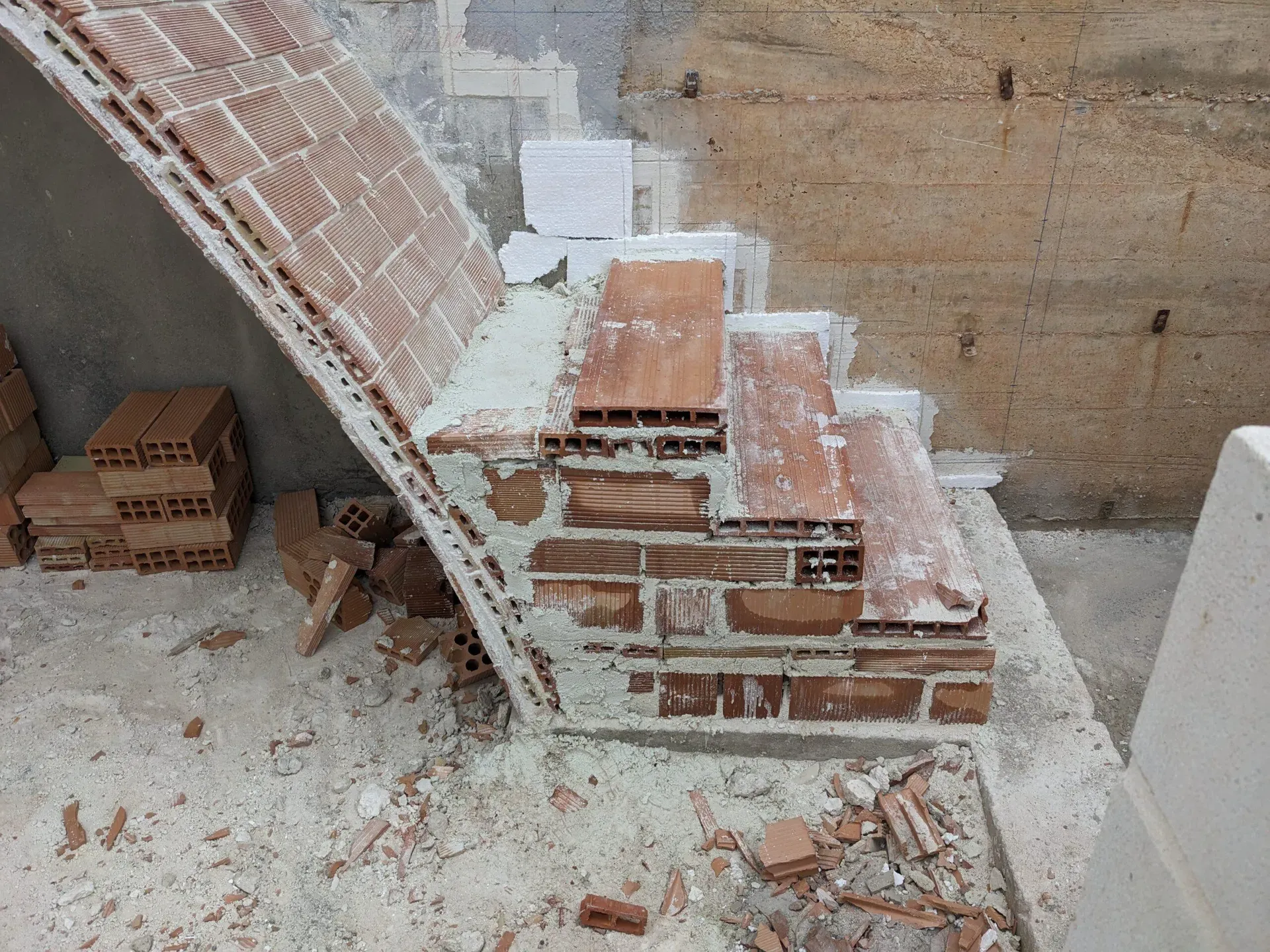
- First layer: traditional brick and gypsum: The first layer (rosca) of the staircase was executed using traditional bricks joined with gypsum. Unlike other methods, this layer was made without formwork, demonstrating that traditional techniques can adapt to current construction methods, ensuring a light yet resistant structure.
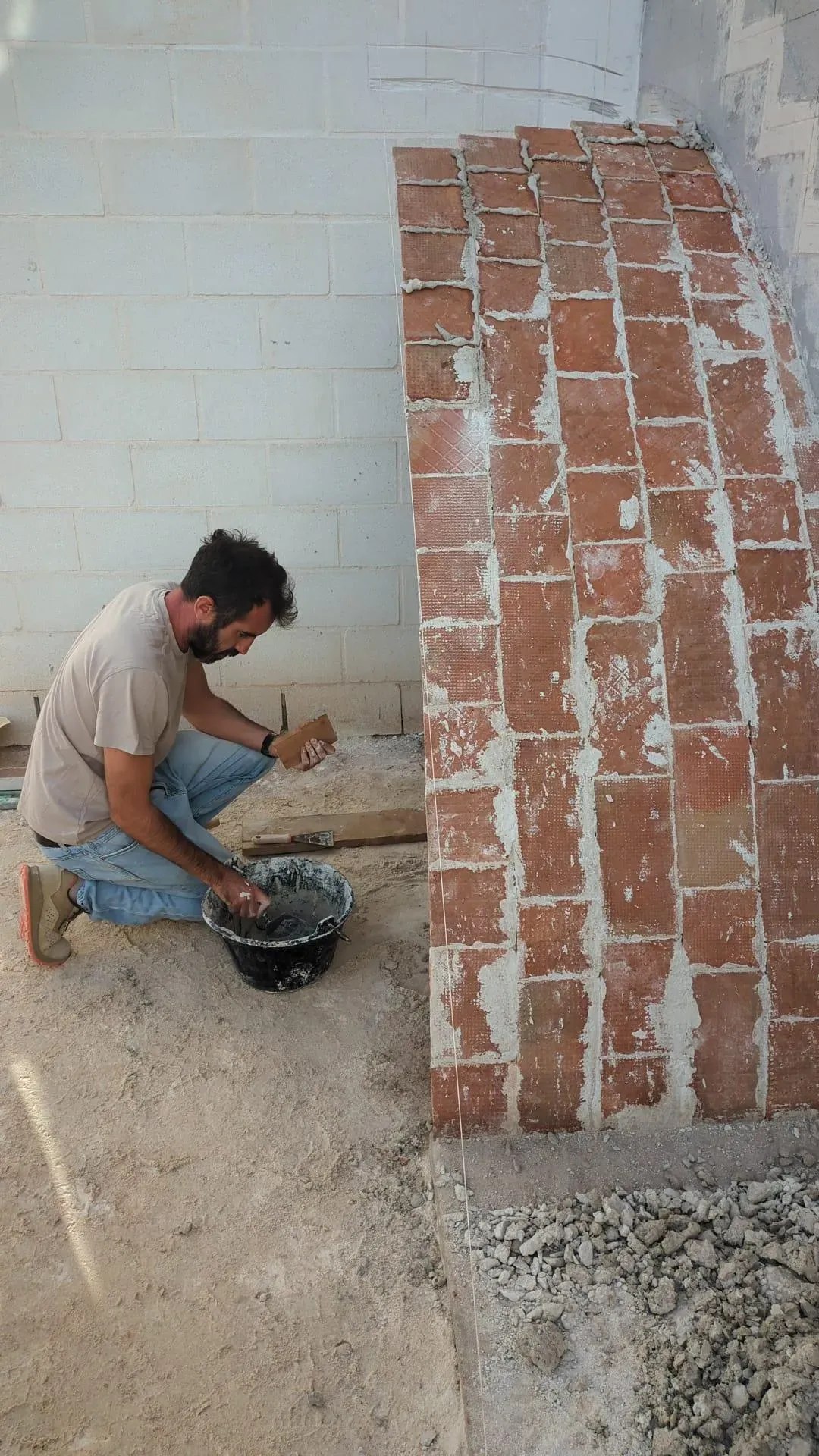
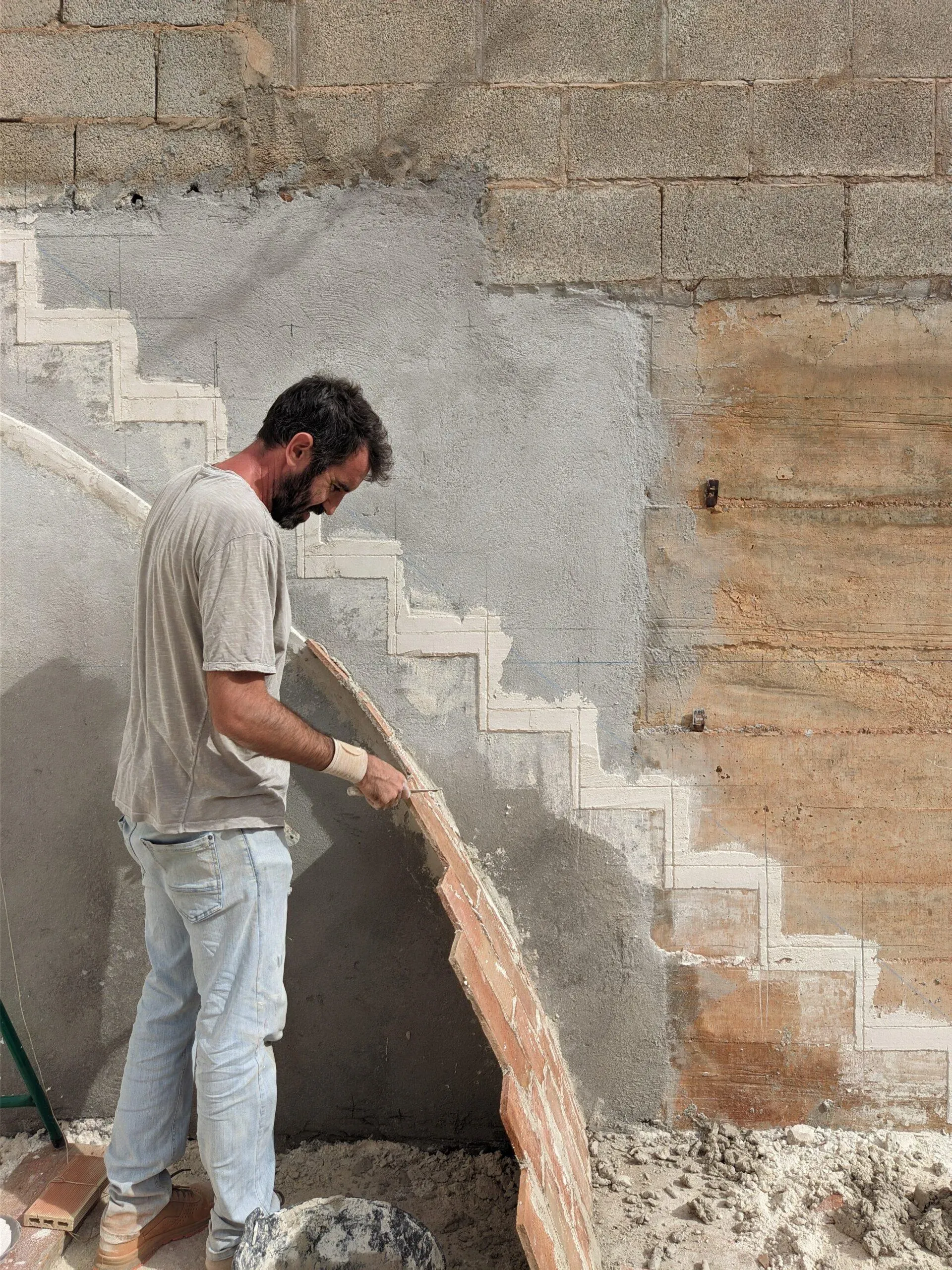
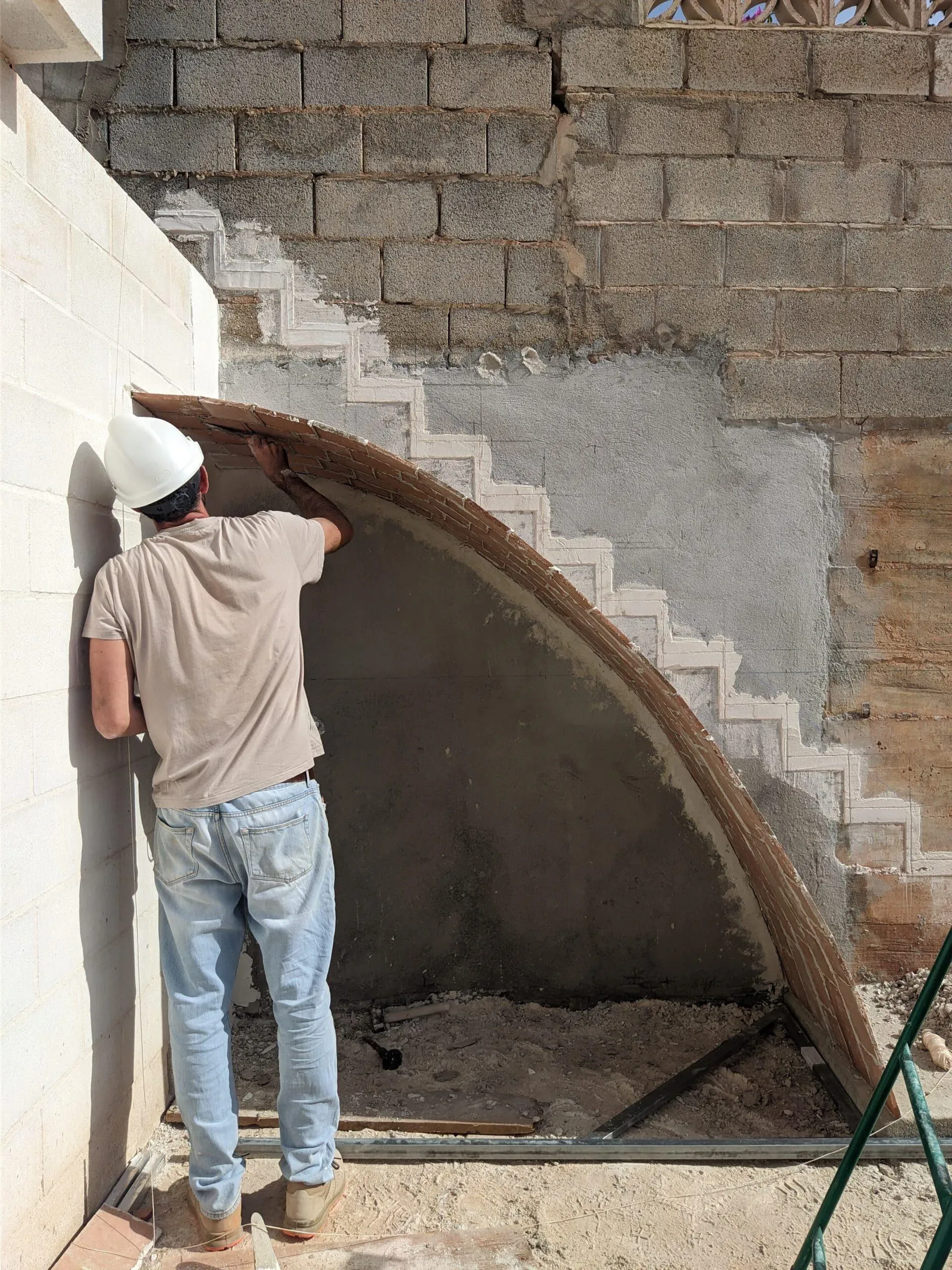
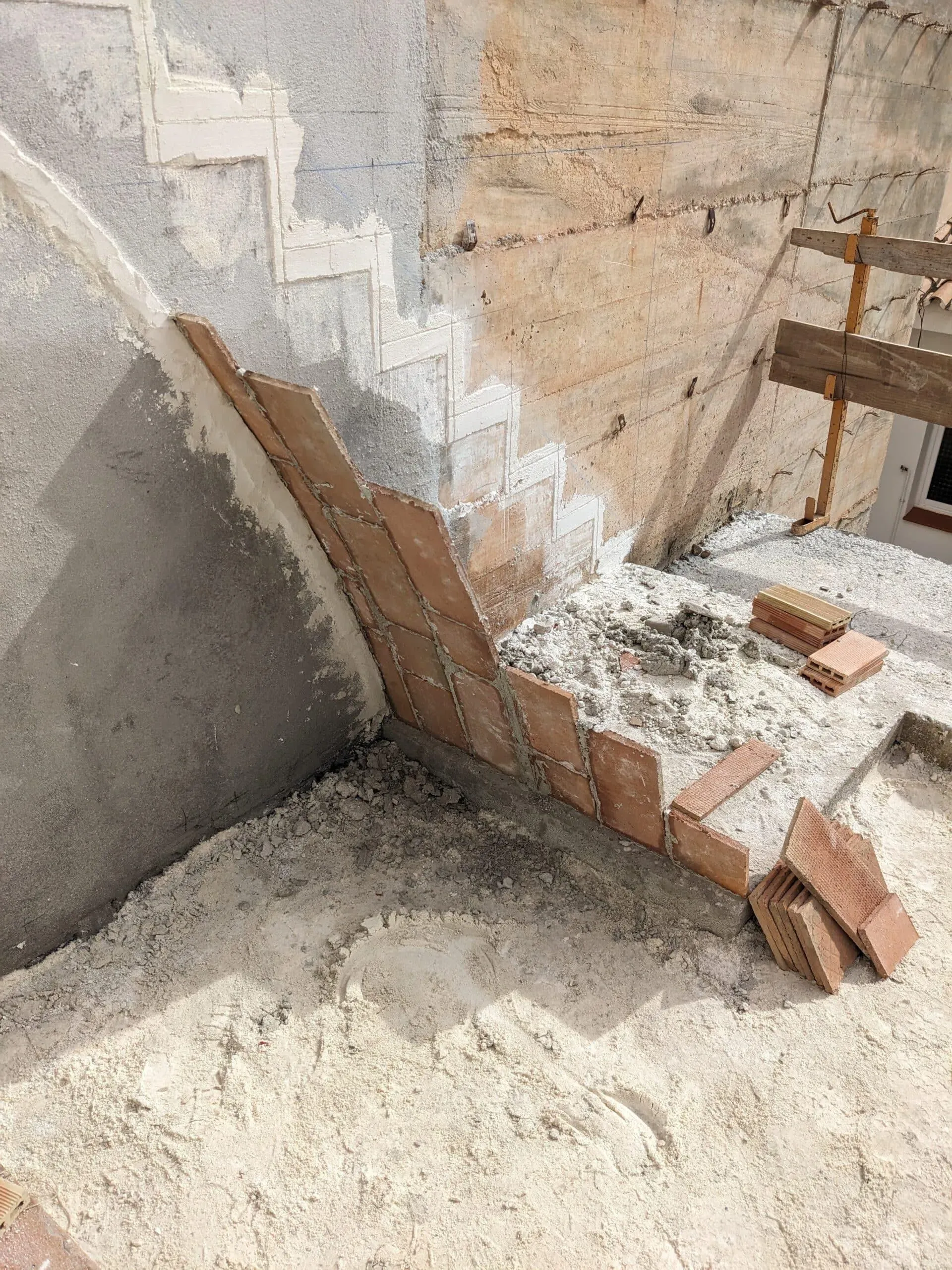
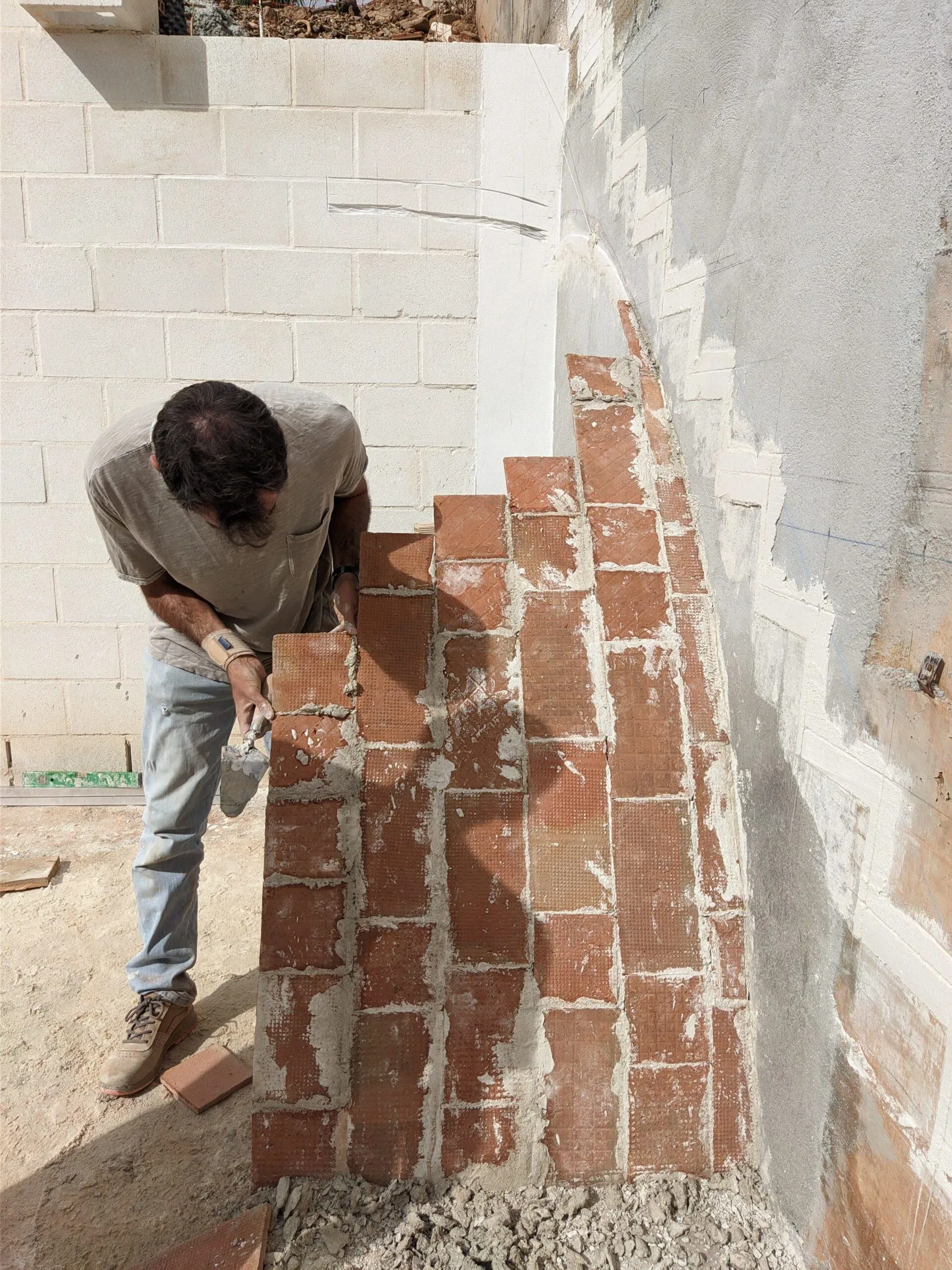
- Second and third layers: lime mortar: Next, the second and third layers were added with lime mortar. These layers reinforce the structure and complete the stability of the staircase. The use of lime also contributes to the sustainability of the project as it is a natural material, with properties of durability and resistance to humidity.
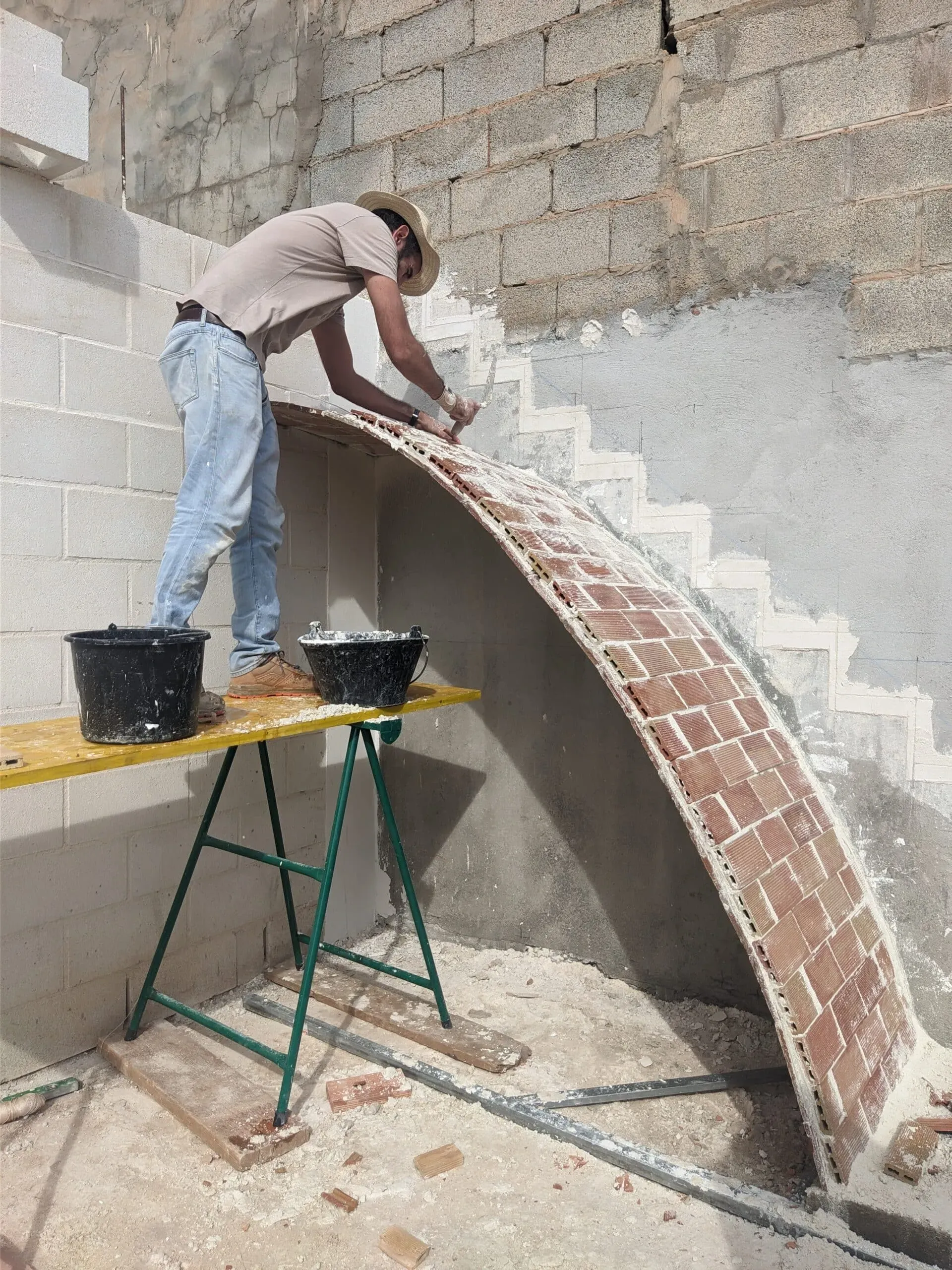
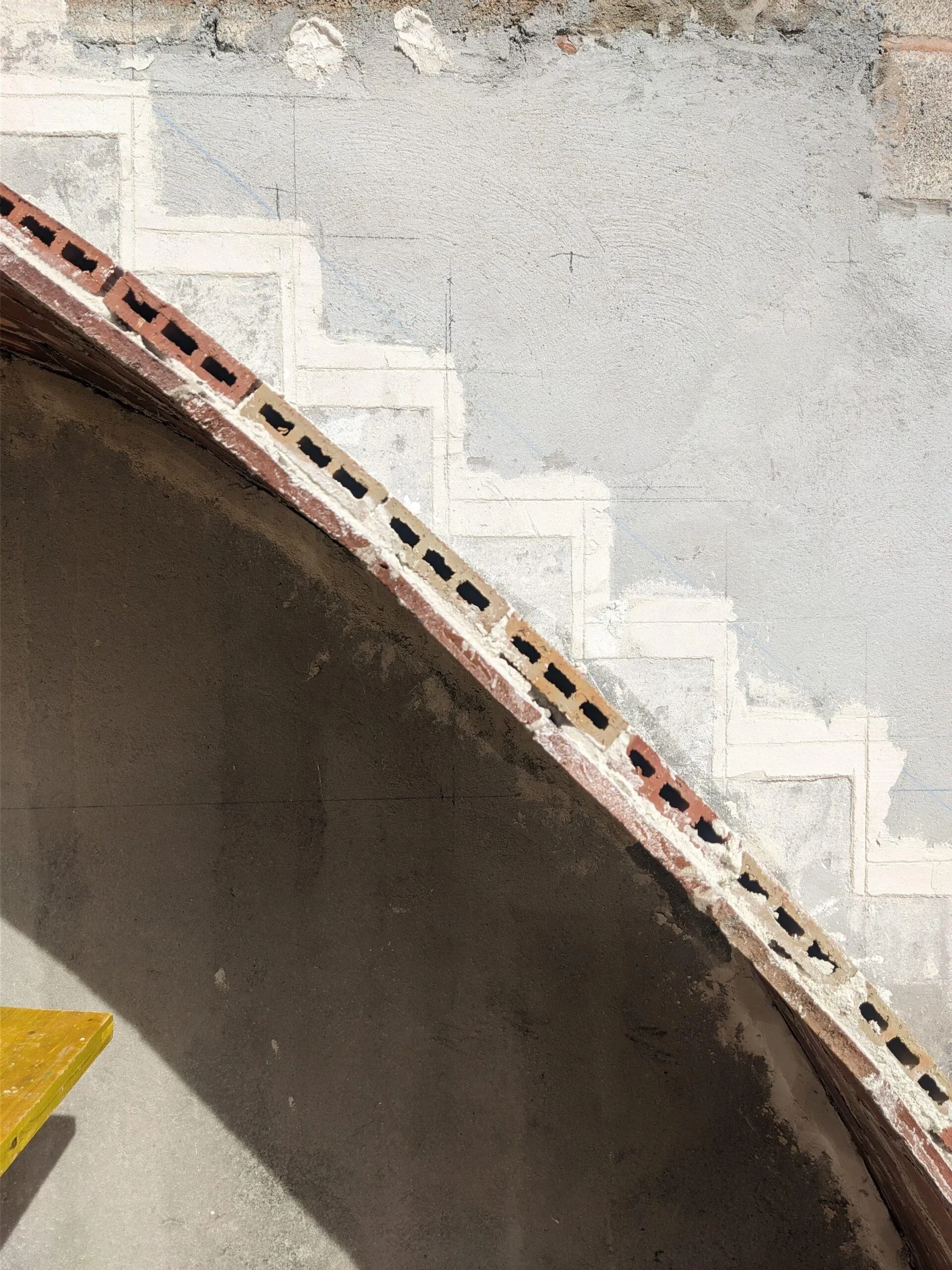
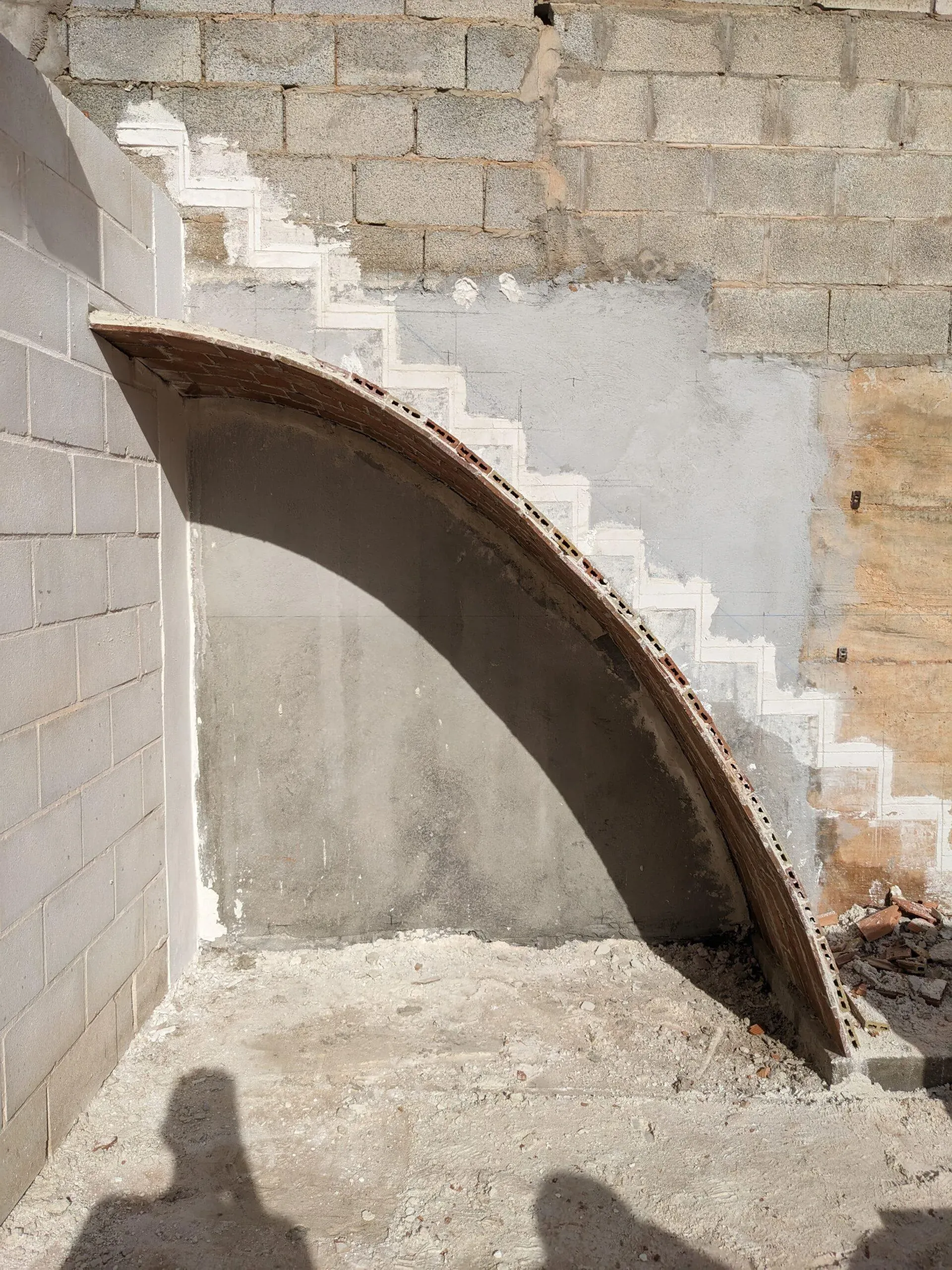
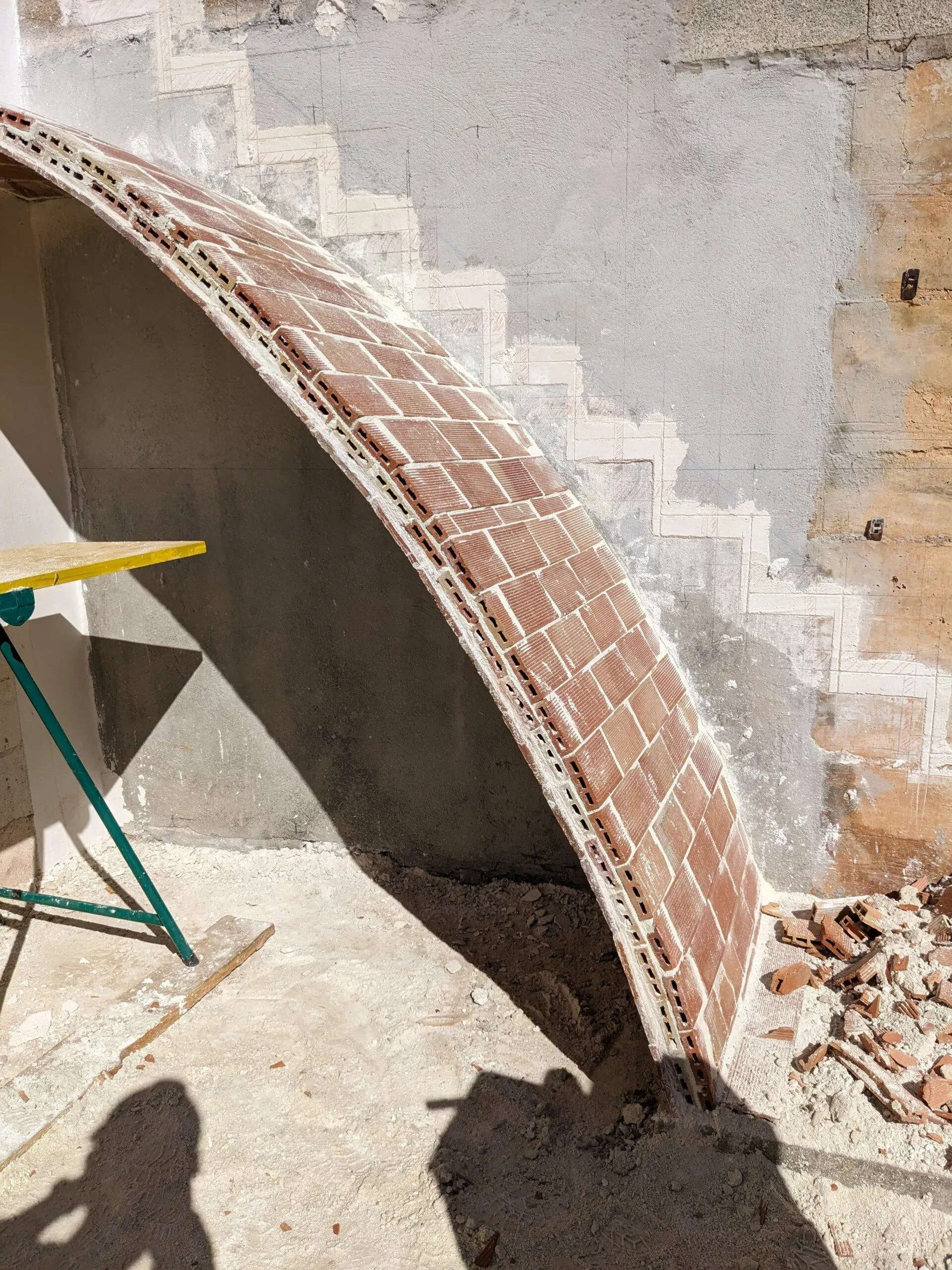
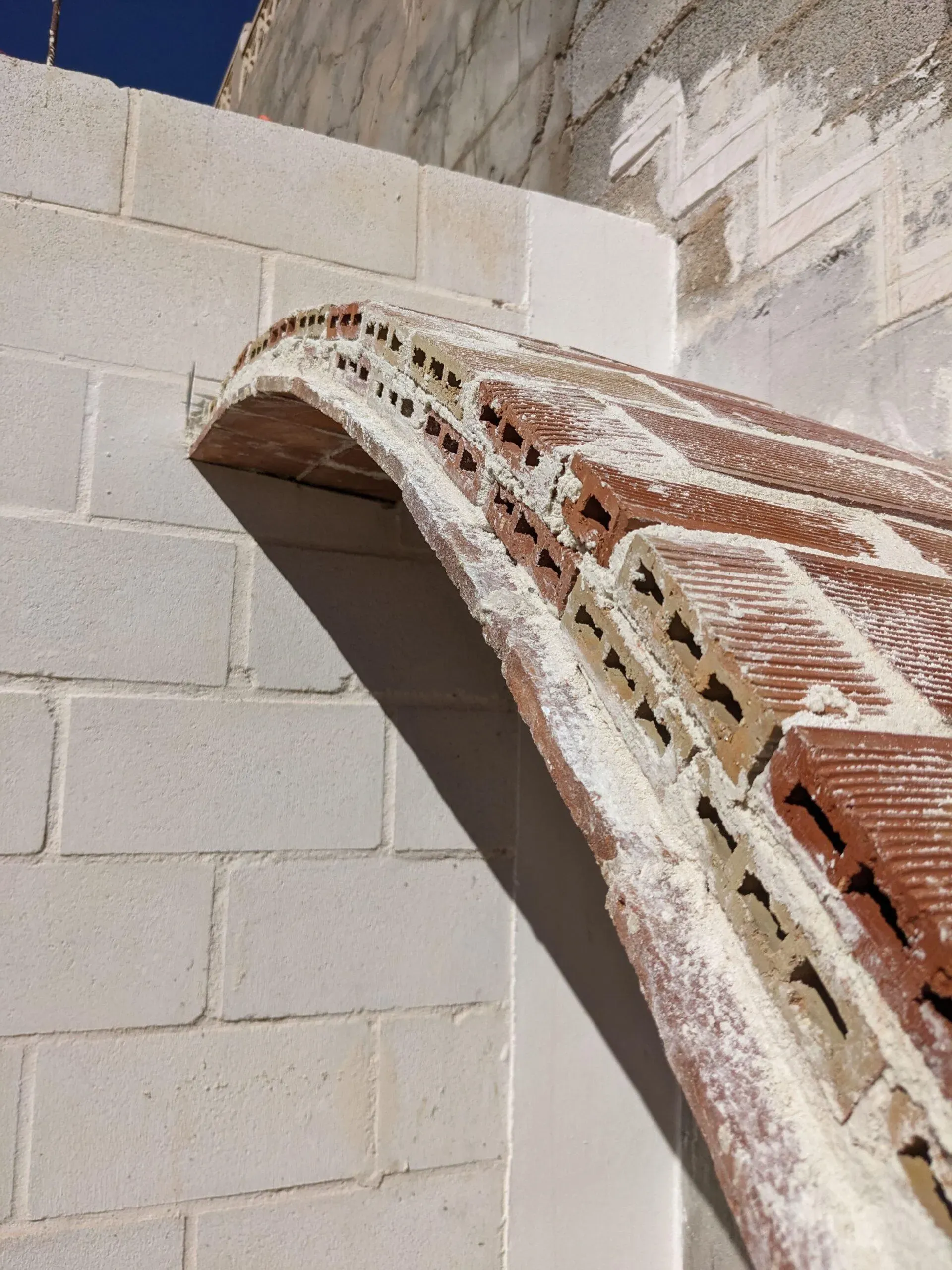
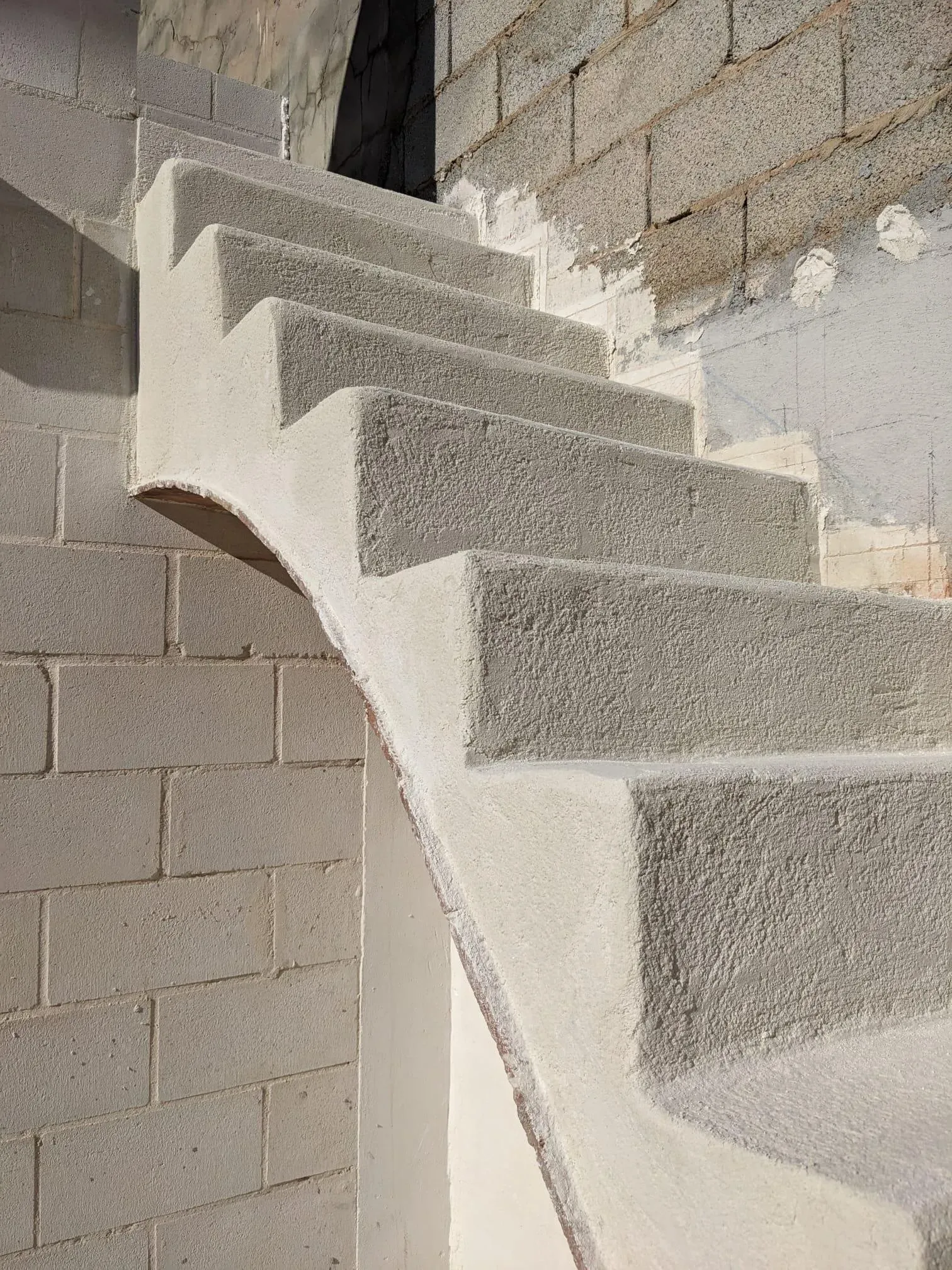
- Steps with double hollow brick and ceramic tiles: once the three layers were finished, we proceeded to execute the steps of the staircase using double hollow brick and ceramic tiles. These materials provide lightness and resistance, providing a uniform and resistant surface for each step, in addition to facilitating the construction process.
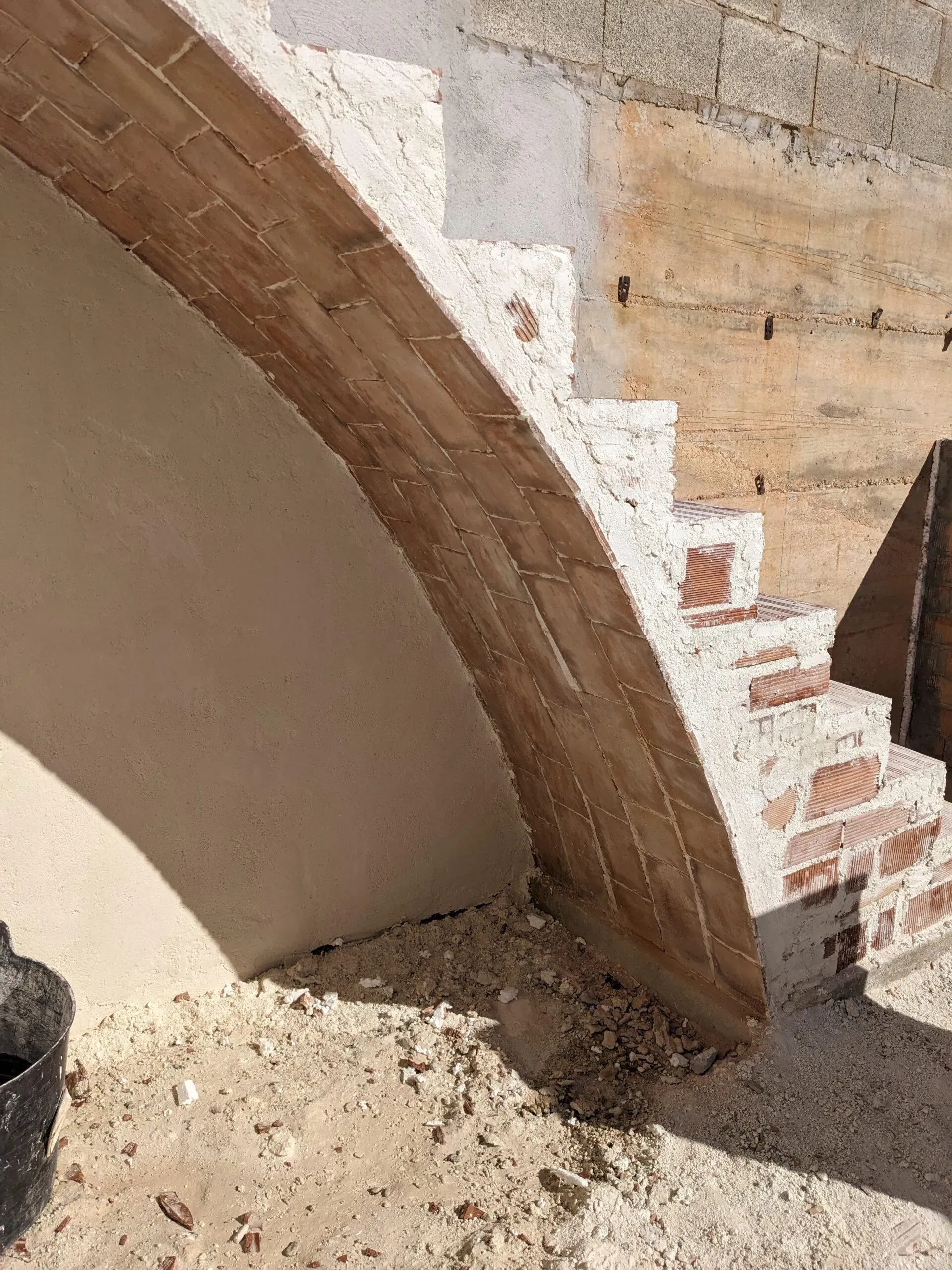
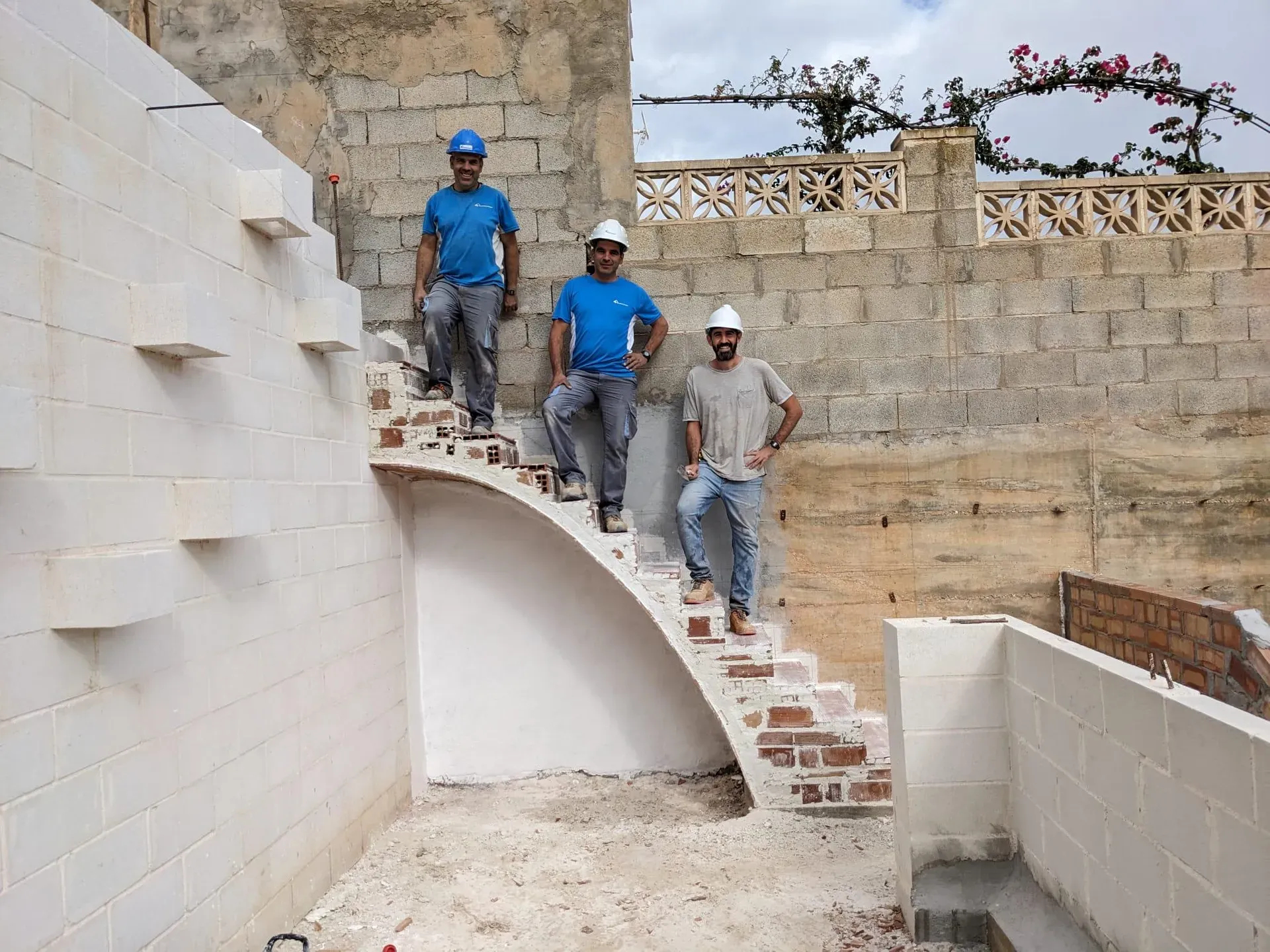
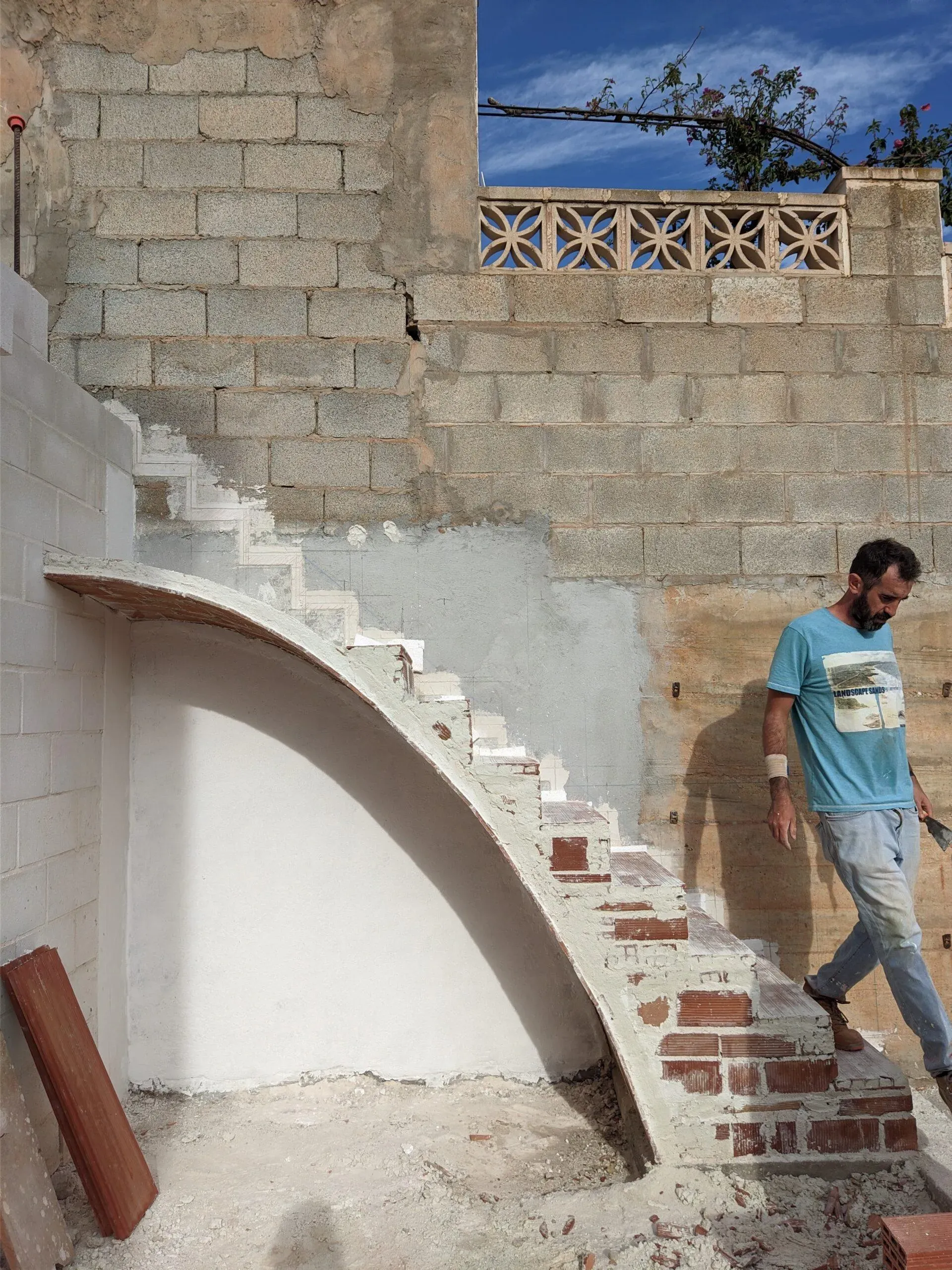
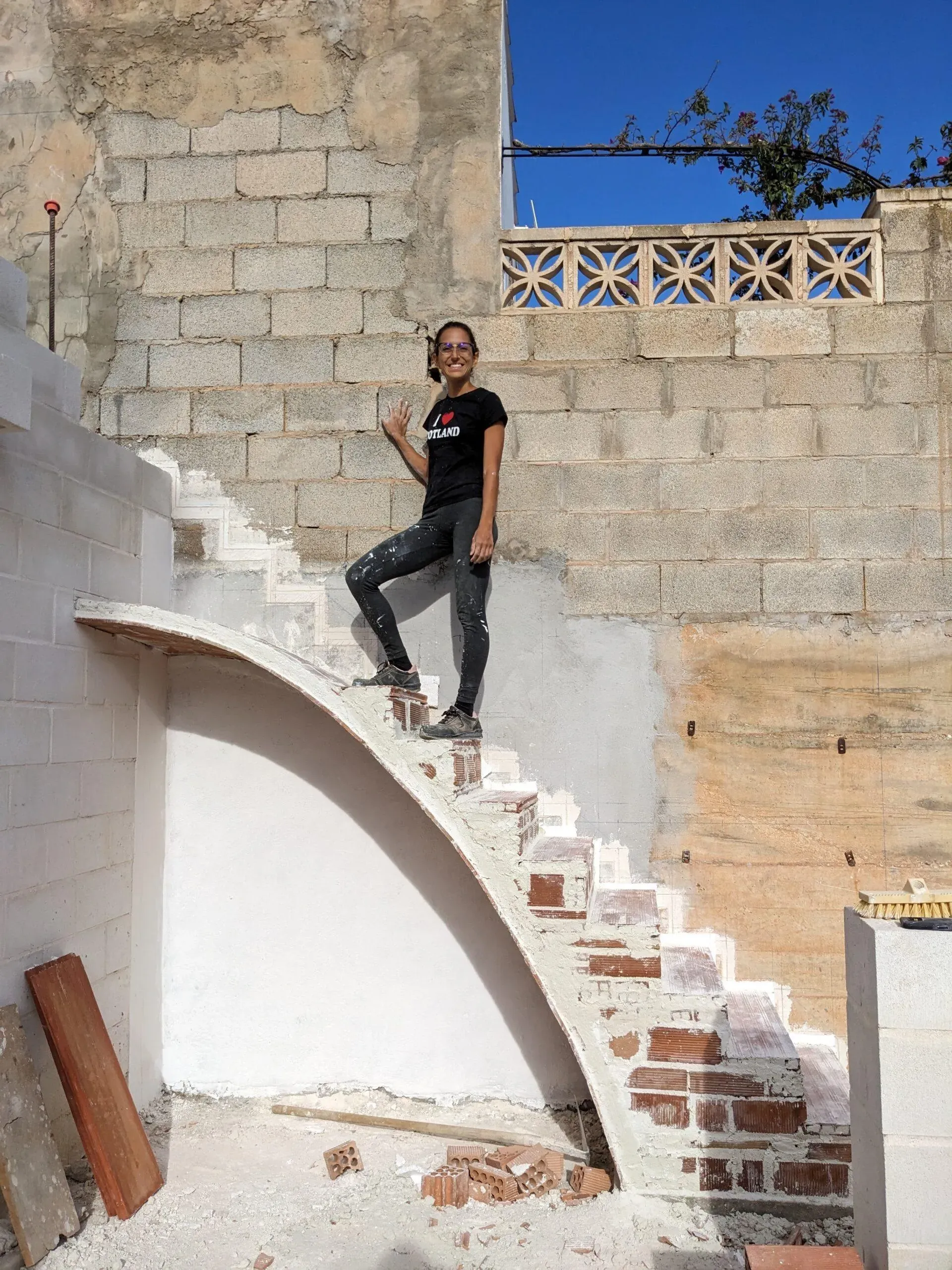
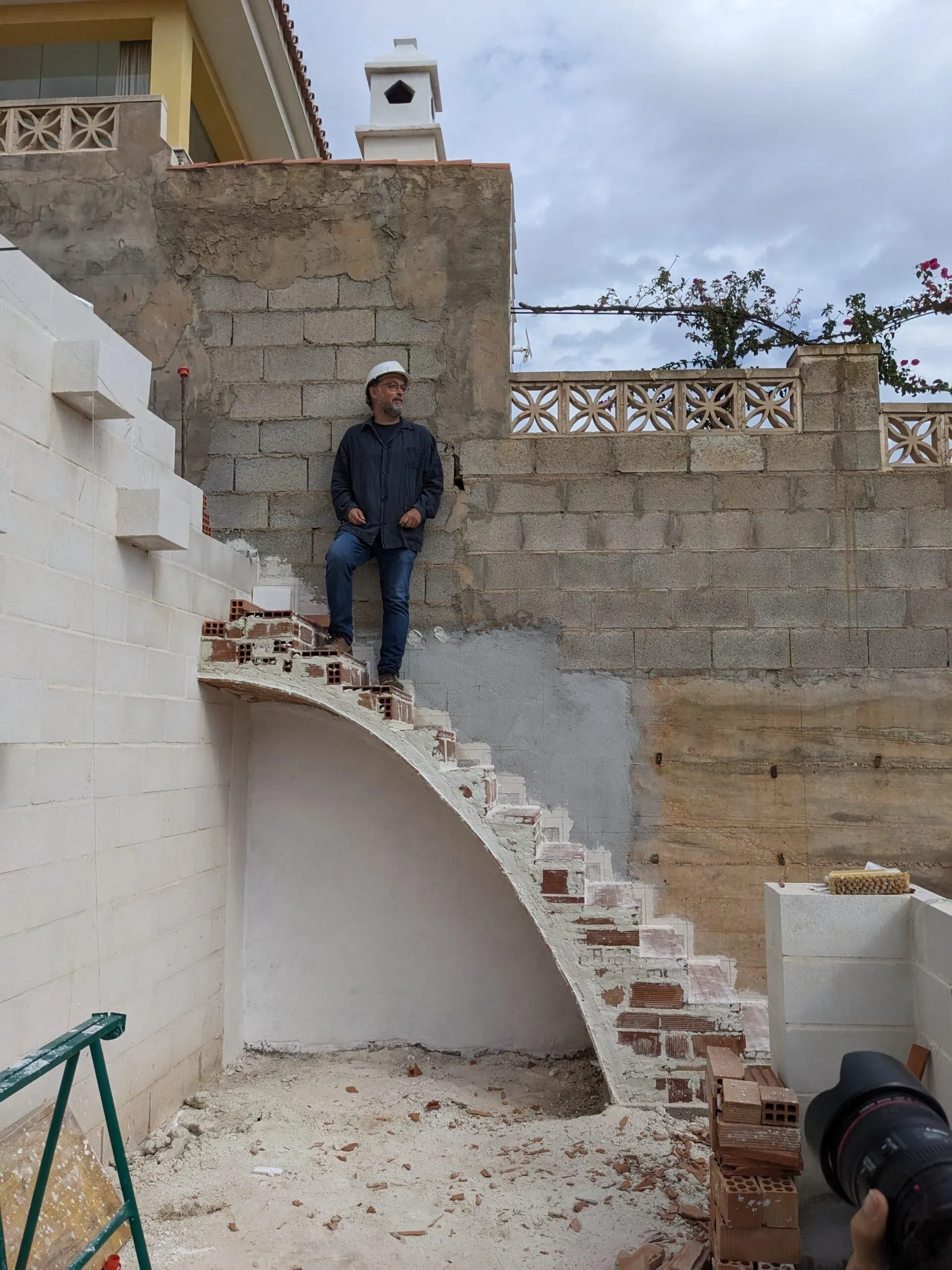
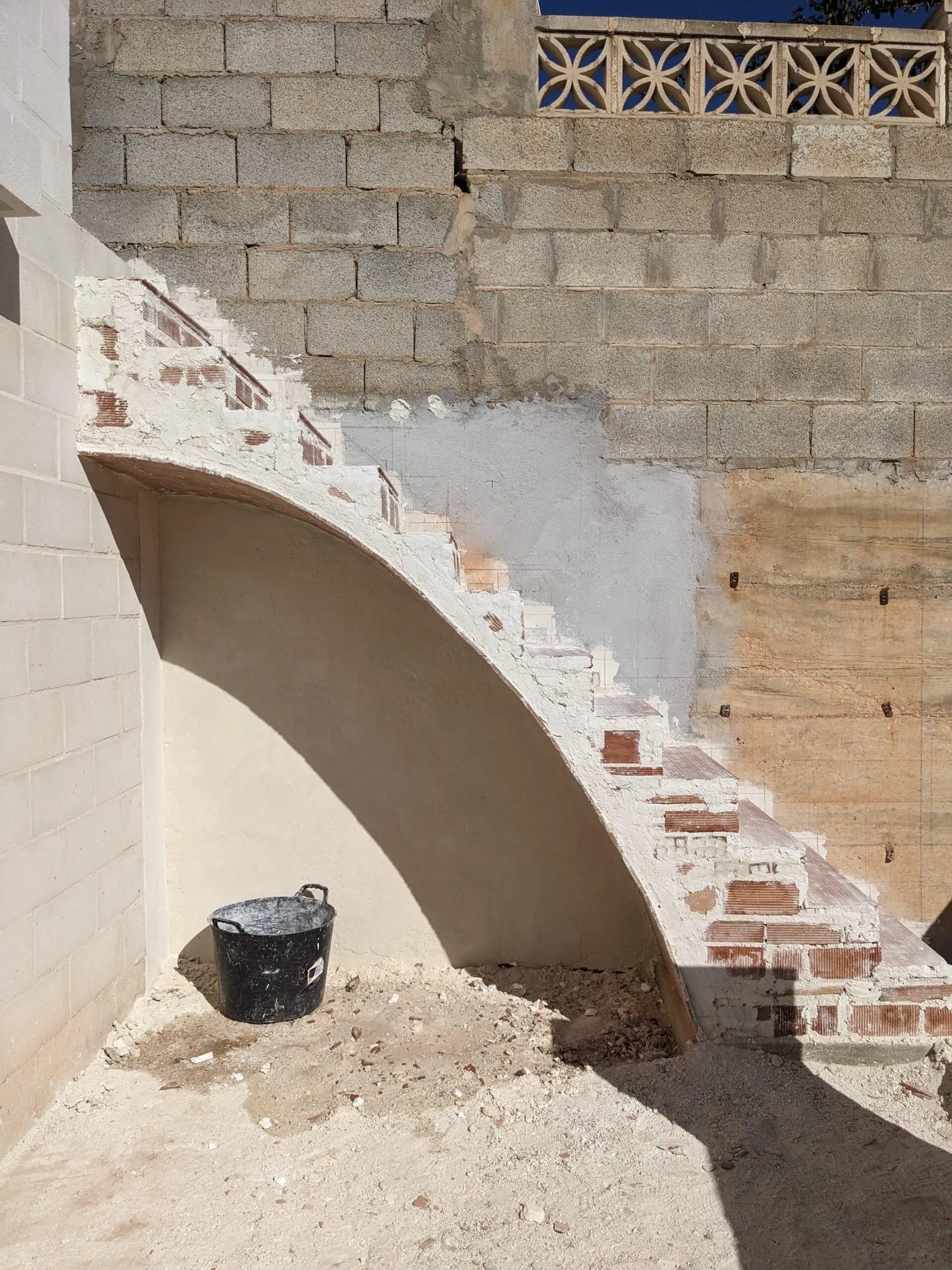
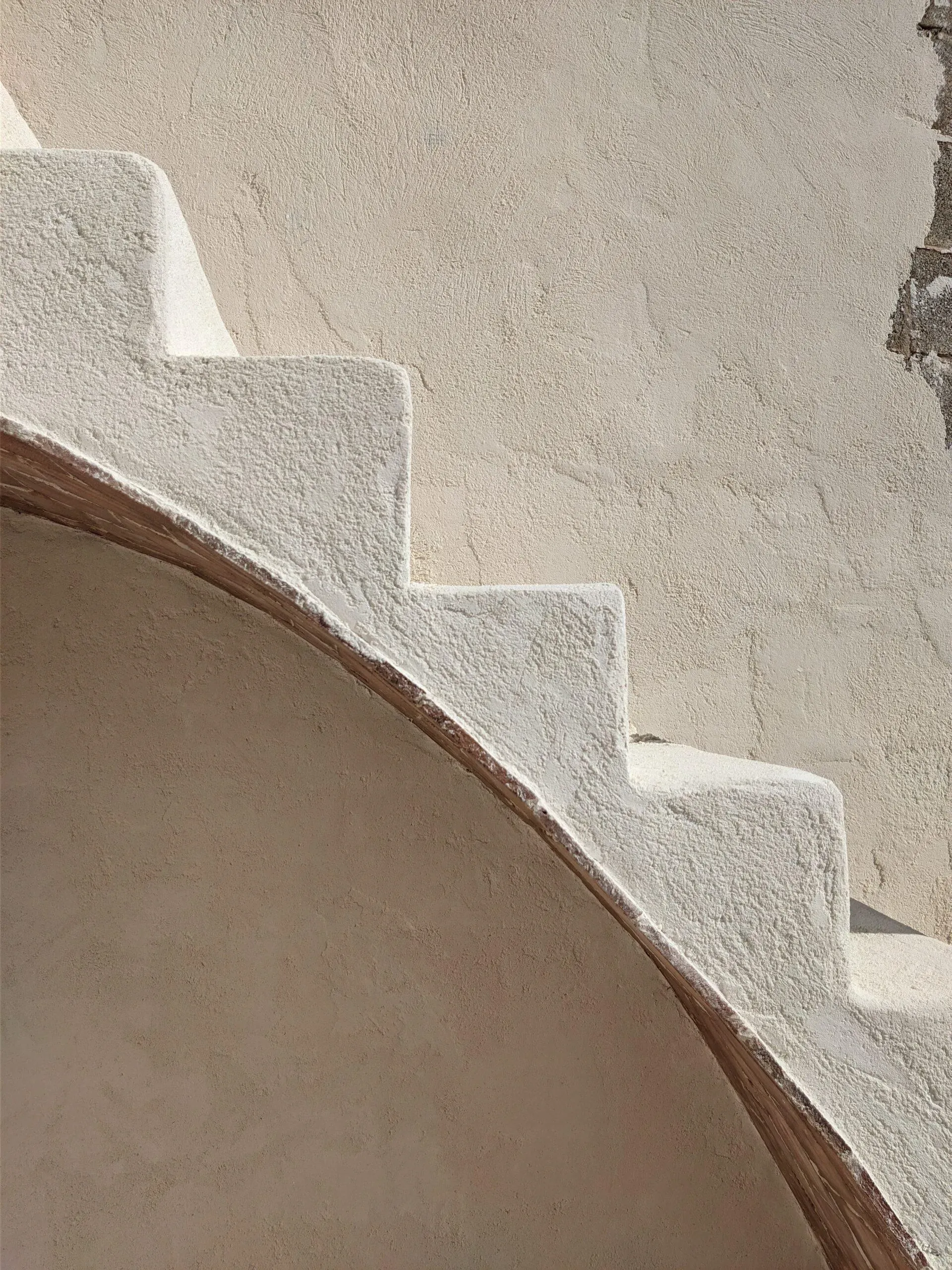
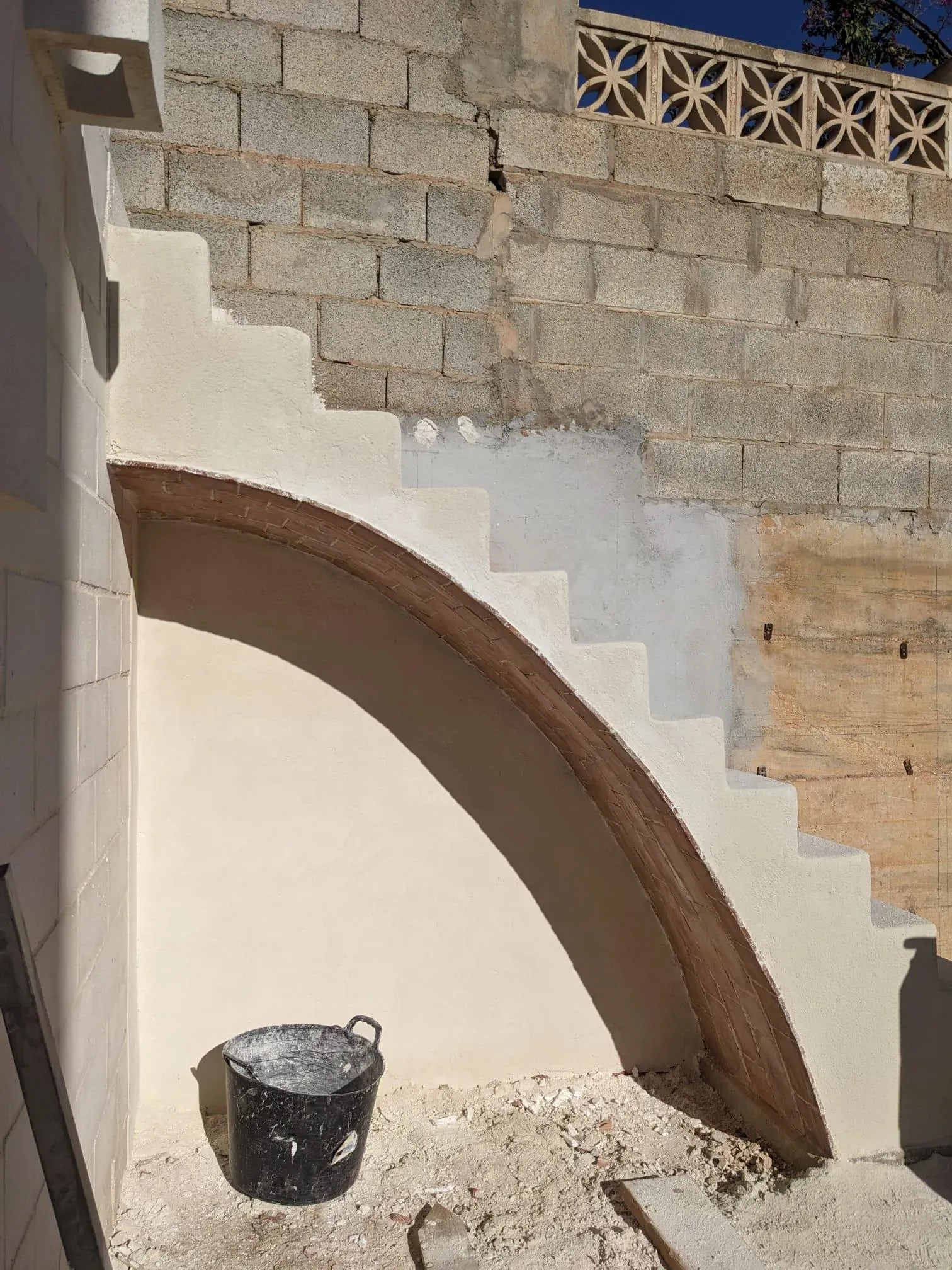
- Waterproof render: finally, the staircase was completed with a waterproof render, a protective layer that prevents the penetration of humidity and provides greater durability. This phase is key to ensuring that the staircase withstands the passage of time and environmental conditions, maintaining its solidity and aesthetics.
An example of traditional and sustainable building
The final result is an artisanal staircase, built with techniques that value tradition and local architectural knowledge, achieving a light and durable structure with minimal environmental impact. The tile vaults are witnesses to a way of building that combines beauty, functionality, and respect for the environment, and this particular staircase has become a unique element within the home, adding a special and elegant touch to the space.
With this project, we reaffirm our commitment to the recovery of traditional techniques and natural building. The tile vault staircase is just one example of how natural materials and vernacular techniques can be integrated into contemporary projects, providing each space with a deep connection to history and the environment.
Inspired by this post?
Discover how we can help you.
By posting a comment, you accept our privacy policy. Your email is used to manage your avatar (Gravatar) and prevent spam, but it will not be published.